
PLAYER PROFILE – Edmond Hoyle: Part 1

Every deck of cards owes something to a man most players have never heard of. Edmond Hoyle spent the 1740s writing down the rules of Whist for wealthy Londoners who kept arguing about them, and in doing so, he accidentally became the reason “the rules of the game” is even a phrase people reach for today.
The Early Life of Edmond Hoyle
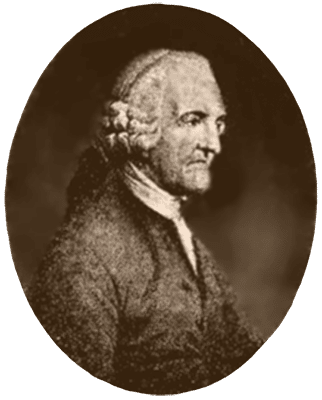
Edmond Hoyle’s early life is largely a blank. Born in 1672, his upbringing and education were never recorded in any detail that survived, which is unusual for someone whose name would eventually end up in dictionaries. What we do know starts much later: by the time he shows up in the historical record, in his late 60s, he already had a reputation for teaching card games to wealthy clients in London.
Hoyle’s Rules of Whist
In 1742, he penned “A Short Treatise on the Game of Whist,” a rulebook that laid down the law for the popular card game of the time. Whist arguments had apparently gotten bad enough that someone needed to write the rules down for good.
Whist was the closest thing the 18th century had to poker: a game of skill, strategy, and a sprinkle of luck that people took seriously enough to need a rulebook for. Hoyle’s rules became the gold standard, and from there he expanded into other card games as well.
Hoyle’s Influence on Other Games
Hoyle didn’t stop at Whist. He became an expert across many games, and his influence spread from chess to backgammon and beyond. His rulebooks became the standard reference for serious players, the thing people pointed to when they needed to settle an argument.
Chess: Hoyle wrote about chess too, one of the earliest attempts to set its rules down formally in English, even though the game as it’s played today was standardized long after his time.
Backgammon: Hoyle’s treatise on backgammon is still considered a classic reference on the game’s rules and strategy.
Bridge: Bridge itself didn’t exist yet in Hoyle’s lifetime, but it evolved directly out of Whist, and its early rulebooks leaned heavily on the framework he’d already laid down for its parent game.
Hoyle’s real skill wasn’t any single game. It was understanding what made people want to keep playing at all: the competition, the company, the small dramas of winning and losing.
Hoyle’s Legacy
Edmond Hoyle’s legacy isn’t confined to the gaming table. His influence reached into education, law, and culture generally. His writings were revered enough to get cited in actual legal cases, and his name became a byword for authority. The phrase “According to Hoyle” comes directly from him, and it still means the same thing today: doing something by the rules or standards, properly.
His rulebooks were treated as reference texts in their own right, teaching logic, strategy, and critical thinking through something as ordinary as a card game.
Hoyle’s Induction into the Poker Hall of Fame
Edmond Hoyle never specifically wrote about poker, a game that didn’t exist yet in any recognizable form during his lifetime, but his principles of probability, strategy, and human psychology laid the foundation for the kind of strategic depth poker would eventually be built on. That’s exactly why he ended up recognized in the Poker Hall of Fame, decades after games bearing any resemblance to poker had even been invented.

The Poker Hall of Fame
The Poker Hall of Fame, established in 1979, is a select group of individuals who have significantly impacted the game of poker. Whether through exceptional skill, contributions to strategy, or promoting the game, inductees represent the best of the poker world.
Hoyle’s induction into this elite circle is a nod to his timeless influence on poker and card games in general. His understanding of games as a blend of skill, luck, and psychology resonates with poker enthusiasts and continues to shape the game.
The Final Hand
Edmond Hoyle died in 1769, but his rulebooks kept getting published for more than a century afterward, under his name, whether he’d written the specific edition or not. Publishers had figured out that “Hoyle” sold books regardless of who was actually holding the pen.
The next time you pick up a deck of cards, there’s a decent chance the rules you’re following trace back to a lawyer who just wanted the Whist arguments at his table to stop.

A Game Well Played
Edmond Hoyle’s story is really about strategy and human nature more than it is about any specific game. His rulebooks outlasted him by centuries, which says something about how much people wanted rules everyone could actually agree on in the first place.
The next time you’re in a game, remember the rules, play fair, and have fun. That last part isn’t something Hoyle ever needed to write a rule for.
There’s more to his story than fits here. Part 2 picks up where this leaves off.
👉 Use Referral Code: WINBIG 👈PLAY NOW!
About the Author: Shawn Altbaum has been writing and editing in the online gaming industry since 2007, reporting live from the WSOP Main Event and conducting interviews with professional players. An active poker player, he combines industry expertise with firsthand knowledge of the games he covers. He currently serves as Global Head of Copywriting at NSUS Group, overseeing brand voice and content strategy across GGPoker and GGVegas.