
A Beginners Guide to Seven Card Stud
Seven-Card Stud, the classic poker game that will have you channeling your inner Chip Reese, is a thrilling and strategic poker variant that’s been played in saloons and casinos for over a century. Whether you’re a complete novice or a Texas Hold’em veteran looking to expand your poker skills, this beginner’s guide will introduce you to the fundamentals of Seven-Card Stud. Ready to ante up? Let’s dive in.
The Basics of Seven-Card Stud
Never played Seven-Card Stud before? You’re in for a treat. This poker game is all about skill and strategy, but a little bit of luck wouldn’t hurt. Here’s what you need to know about the basic rules:
Players: Usually played with 2 to 8 players at the table.
Cards: A standard 52-card deck is used.
Goal: To have the best five-card hand at showdown.
Unlike community card poker games such as Texas Hold’em, Seven-Card Stud is a stud poker variant where each player receives their own individual cards. There are no community cards shared among players, which fundamentally changes how you approach the game. Most poker games spread Seven-Card Stud in fixed limit format, though pot limit and no limit versions exist in rare cases.
Antes and the Bring-In
Before the dealer deals any cards, all players must place an ante into the pot. Think of it as your ticket to the Seven-Card Stud party.
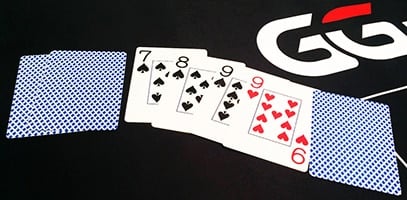
Once the antes are in, the dealer deals each player two face-down cards (similar to hole cards in Texas Hold’em) and one face-up card. The player with the lowest face-up card must make a forced bet called the “bring-in.” If multiple players tie for the lowest card, suit ranking determines who brings it in (clubs lowest, then diamonds, hearts, and spades highest).
After the bring-in is posted, the action moves clockwise around the table. Other players can fold, call the bring-in, or complete it to a full small bet (which counts as a raise). This structure differs from Texas Hold’em, where the small blind and big blind create the initial pot using a dealer button system. In stud poker, every player contributes before seeing their cards.
The Five Betting Rounds
Seven-Card Stud is played over five betting rounds. In fixed limit games, bets on third and fourth street use the small bet amount, while fifth through seventh street use the larger big bet. From Fourth Street onward, the player showing the strongest hand always acts first. This is a key difference from Texas Hold’em’s fixed position structure. Each round brings new information as more cards are revealed:
Third Street (First Betting Round): After the bring-in, players can fold, call, or complete to a full bet. Each player has three cards (two face down, one face up).
Fourth Street: The dealer deals another face-up card to each remaining player. The player with the highest hand showing starts the betting. If a player shows a pair, they may have the option to bet at the big bet amount.
Fifth Street: Another face-up card is dealt. Players now have five cards total (two hidden and three exposed). Betting moves to the big bet amount in fixed limit games.
Sixth Street: Another face-up card is dealt to all remaining players. Each player now has six cards, with four visible to opponents.
Seventh Street (Final Betting Round): The final card is dealt face down, giving each player seven cards total. After the final betting round, if two or more players remain, the hand goes to showdown.
Your goal is to make the best five-card hand from your seven cards.

Hand Rankings in Seven-Card Stud
Understanding hand rankings is crucial for any poker game. Seven-Card Stud uses the same hand rankings as Texas Hold’em and most other poker games. Here’s the hierarchy from highest to lowest:
Royal Flush: A straight flush consisting of the five highest cards (Ace through Ten, all of the same suit).
Straight Flush: Five consecutive cards of the same suit.
Four of a Kind: Four cards of the same rank.
Full House: Three cards of one rank and two cards of another rank.
Flush: Five cards of the same suit, not in sequence.
Straight: Five consecutive cards of different suits.
Three of a Kind: Three cards of the same rank.
Two Pair: Two cards of one rank and two cards of another rank.
One Pair: Two cards of the same rank.
High Card: When no other poker hand is made, the highest card determines the winner.
In stud poker, you can see most of your opponents’ cards as they’re dealt face up. If you’re drawing to a flush but see that many cards of your suit are already exposed in other players’ hands, your odds of completing that flush drop significantly.
Basic Seven-Card Stud Strategy for Beginners
Seven-Card Stud isn’t just about luck. It’s a poker game of skill and strategy. Here are essential tips to get you started:
Pay Attention to Face-Up Cards: The visible cards tell you what hands are possible and what cards are “dead” (already out of play). This is unique to stud poker and crucial for making good decisions.
Start with Strong Hands: Play high pairs, three cards to a straight flush, or three high cards of the same suit when those cards are live (not already showing in opponents’ hands). Beginners should fold weaker starting hands until they gain more experience.
Don’t Be Afraid to Fold: If your hand isn’t developing and other players are showing strength, fold and preserve your chips for better spots. This is fundamental to winning poker.
Observe Betting Patterns: Watch how opponents bet across multiple hands. In poker tournaments and cash games alike, patterns emerge that reveal player tendencies.
Practice Makes Perfect: The best way to improve your poker skills is through consistent play, whether in free poker games or real money tables as you gain confidence.
As a beginner, focus on these fundamentals before diving into more advanced concepts. Learning stud poker takes time and practice.

Why Learn Seven-Card Stud?
While Seven-Card Stud may not be as widely played as Texas Hold’em in modern poker games, understanding this classic poker variant offers valuable benefits. The game teaches important poker skills like card tracking, hand reading, and strategic thinking that transfer to all other poker games, including texas holdem poker.
Many poker tournaments, especially mixed-game events, include Seven-Card Stud rounds. The World Series of Poker (WSOP) still features dedicated Stud events. Even if you primarily play other poker variants, knowing the basics of stud poker makes you a more well-rounded player.
Whether you’re playing online poker or in live games, the observation skills and discipline you develop from learning Seven-Card Stud will improve your performance across all poker games. It’s a foundational poker variant worth understanding.
Conclusion
That’s your beginner’s introduction to Seven-Card Stud. From understanding the basic rules to learning betting rounds, hand rankings, and fundamental strategy, you now have a solid foundation to understand this classic poker game.
This historic poker variant teaches valuable lessons that make you a better all-around player. The exposed cards create an information-rich environment that develops observation skills and strategic thinking that transfer directly to other poker games like Texas Hold’em and Omaha.
While Seven-Card Stud isn’t currently offered at GGPoker, learning about different poker variants strengthens your overall poker skills and deepens your understanding of poker strategy. The concepts from stud poker (reading opponents, tracking cards, understanding betting patterns) apply universally across all poker games.
Keep expanding your poker knowledge. Understanding classic games like Seven-Card Stud makes you a more complete player. And remember: have fun. After all, poker is about enjoying the game, learning continuously, and appreciating its rich strategic depth. Happy playing.
Expand Your Poker Skills at GGPoker
Online poker reaches a new level at GGPoker, where players of all skill levels can find their place, whether through cash games, major poker tournaments, or pursuing a WSOP bracelet. GGPoker features powerful tools like Smart HUD and PokerCraft, integrated staking options, and GGPoker School with free poker games and strategy content. Whether you’re looking to play Texas Hold’em, Omaha, or other exciting poker games, the platform delivers a premium playing online experience with some of the world’s biggest poker tournaments. Build your poker skills, test new strategies, and reach new heights in your poker journey today.
About the Author: Maury Orton is a poker writer and editor contributing to GGPoker. He focuses on clear, reliable explanations of the game, drawing on years of experience in online poker media and digital publishing.