POKER PLAYER PROFILE – Chris Ferguson
Chris Ferguson: Playing Poker Games With ‘Jesus’
Poker’s competitive scene has produced some incredible stories over the decades. High-stakes gameplay, unique strategies, impressive accomplishments, and flamboyant personalities have pushed poker games to new heights. Whether you play poker in cash games or tournaments, studying legendary professionals can improve your own approach. Today, we’ll look at one poker pro with his fair share of both accolades and controversy: Chris “Jesus” Ferguson.
PLAY ONLINE POKER GAMES & THE WSOP MAIN EVENT
Poker Career and Playing Style
Chris Ferguson was one of the most prominent personalities during the advent of poker television. Regularly appearing on ESPN’s World Series of Poker (WSOP) broadcast in the early 2000s, he was instantly recognizable for many reasons.
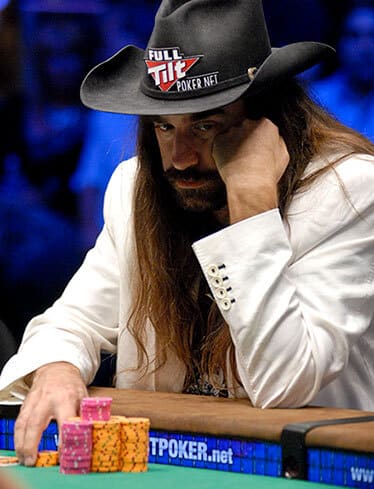
Nicknamed “Jesus” for his trademark long hair and beard, he was recognizable for his distinctive wide-brimmed black hat and sunglasses at the table. Ferguson employed a tight, mathematically-driven style informed by game theory principles. He used math and odds to play the ideal hands, emphasizing disciplined betting rounds and careful hand selection, particularly in Texas Hold’em tournaments where position and pot odds matter most. His background helps explain this approach. Born to mathematicians, Ferguson holds a Ph.D. in computer science. At the table, he was also exasperatingly quiet and still, helping mask his strategies as he would play poker games at the highest levels.
Ferguson has the results to back it up. He has six WSOP bracelets, including a win at the 2000 Main Event. Ferguson also won the 2008 NBC National Heads-Up Poker Championship. All in all, he has over $9.5 million in total tournament winnings across his poker career.
Early Life
Christopher Philip Ferguson was born in Los Angeles, California on April 11, 1963. Both his parents had degrees in math, and his father was a professor of game theory and theoretical probability at the University of California, Los Angeles (UCLA). His upbringing explains why he valued education from an early age, frequently studying and reading on his own.
Ferguson discovered poker when he was young and his father helped him refine his strategies with the knowledge of game theory. While attending UCLA and working towards a degree in computer science, Chris’ passion for poker grew. He played online poker through IRC chat rooms, eventually booking frequent trips to Vegas with his friends. It was there where he honed his skills and developed his iconic look. Ferguson used to wear his shades to look older but now keeps them for good luck. During this period, he studied various poker games including Omaha and Seven Card Stud, though Texas Hold’em would become his primary focus in tournament play.
He earned a Ph.D. in computer science in 1999.

Poker Career
Ferguson honed his skills in small tournaments like the LA Poker Open and Masters of Poker Championships. He made his first appearance at the WSOP in 1995, making the final table of the $1,500 Seven-Card Razz event, cashing for $10,350. It was this performance that led him to make poker his full-time career.
Strategic Approach
With his intellectual poker style, Ferguson is able to beat his opponents mathematically and psychologically. He tailors his plays to push the other players out of their comfort zones, making them more prone to mistakes. Ferguson said, “I try to play the style that gives my opponents the hardest time.”
His mathematical approach means carefully calculating pot odds during each betting round. Whether playing Texas Hold’em or Omaha, Ferguson analyzes the strength of his hand against the range of hands his opponents might hold. In tournaments, this disciplined strategy helps him navigate through multiple betting rounds without risking chips unnecessarily. Understanding when to bet, when to raise, and when to fold based on hand rankings and opponent behavior is crucial. When the chips are on the line in high-stakes games, Ferguson’s analytical approach gives him an edge. He also fully uses his computer science background, frequently analyzing hands or developing his simulations to come out on top.
WSOP Tournament Success
This playstyle yielded him fantastic results in the 2000 WSOP. Ferguson defeated T.J. Cloutier heads-up for the main event title and $1,500,000 in prize money. The final hand saw Ferguson holding A-9 against Cloutier’s A-Q, with Ferguson catching a nine to secure the winning hand. He also earned another WSOP bracelet at the $2,500 Seven Card Stud event in the same year. From there, Ferguson began racking up more victories at WSOP events, with a win in a 2001 Omaha Hi-Lo event plus two more in 2003 at the Omaha Hi-Lo and mixed Holdem/Seven Card Stud events. His success at the WSOP cemented his reputation in the poker world.
Aside from the WSOP, Ferguson won the 2008 NBC National Heads-Up Championship, which earned him $500,000 in prize money. He was also a regular contender and winner on poker TV shows like Poker After Dark and The Poker Lounge, competing against top professionals like Daniel Negreanu. These televised poker games showcased his ability to play poker against the world’s best players in high-pressure situations where every decision, every bet, and every chip counts.

Full Tilt Poker and Online Games
Ferguson was a co-founder of Full Tilt Poker, contributing to the platform’s design and mathematical infrastructure. Established in 2004, it quickly became one of the most popular online poker sites, thanks in part to Ferguson’s $10,000 challenge.
The $10,000 Challenge
He made $10,000 from scratch, starting with freeroll tournaments. These free poker tournaments allowed players to compete without entry fees, earning free chips to start building a bankroll from nothing. He had a rough start and only earned $6 after several months of free tournaments. He didn’t give up and eventually built up his bankroll to $100 after nine months of hard work and strict budgeting.
The challenge demonstrated disciplined bankroll management. Ferguson would only play poker games within his limits, never risking more than a small percentage of his total chips on any single tournament. He carefully managed his money, making smart bets and avoiding tilt. Eventually, through consistent discipline, he achieved his goal of $10,000. This challenge inspired countless players to try playing online poker with conservative bankroll strategies, showing that with proper betting discipline and money management, anyone could grow their bankroll.
Scandal
April 15, 2011 would later be known as Black Friday, an infamous day in online poker history. It was when the US government shut down several notable poker sites, including Full Tilt Poker and PokerStars. The indictments included charges of bank fraud, wire fraud, and money laundering, in addition to allegations of operating in violation of the Unlawful Internet Gambling Enforcement Act.
It left players scrambling to withdraw the money in their accounts, only to discover they couldn’t access their funds. With the online poker community in chaos and millions of dollars frozen, the US Department of Justice filed a motion on September 20, 2011 to amend a civil complaint accusing Ferguson and the website’s other directors of operating a Ponzi scheme. The allegation was that they paid out $444 million of customer money to themselves and the firm’s owners.
Ferguson denied the charges and the case against him was dismissed in February 2013.
Recent Years
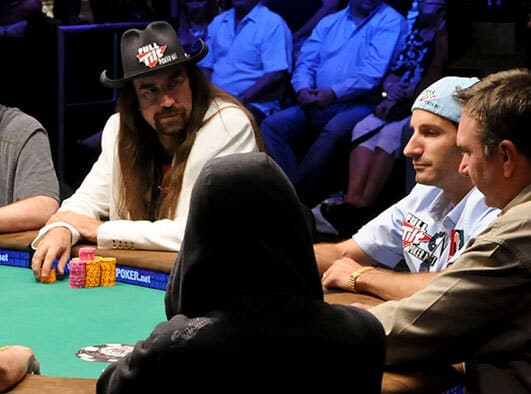
Ferguson returned to the poker scene several years later in 2016, when he appeared at the WSOP, much to the apprehension of many in the poker community. He has since played in numerous major tournaments with his latest cashes in 2020 at WSOP events. By necessity, he transitioned from playing in live events to online tournaments on the WSOP.com and GGPoker sites, where players can play poker games from anywhere in the world. The online poker landscape has evolved significantly since his Full Tilt days, with new platforms offering various poker games including Texas Hold’em, Omaha, and tournament formats that attract millions of players globally. Modern online poker sites offer improved security, better money handling, and more tournament options than ever before for players looking to play poker online.
About the Author: Maury Orton is a poker writer and editor contributing to GGPoker. He focuses on clear, reliable explanations of the game, drawing on years of experience in online poker media and digital publishing.