
GGPoker’s Flip & Go Strategy Guide

Survive the flips. Win the tournament.
GGPoker’s Flip & Go combines luck and skill in a unique two-phase format. First, you play all-in every hand until a set number of players are eliminated. Then, survivors play a traditional tournament. It’s part lottery, part skill game—and understanding both phases is essential for profitability.
This guide breaks down the optimal strategy for the all-in Flip phase and the Go phase that follows.
How Flip & Go Works
The format operates in two distinct phases:
Phase 1: The Flip Phase
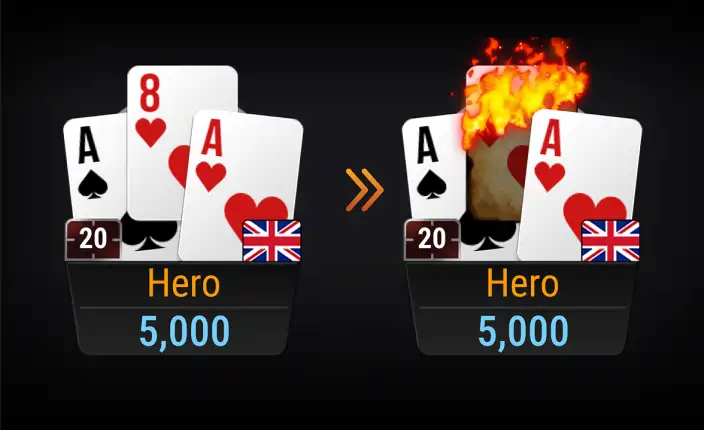
- Players are dealt 3 cards. They keep 2 and throw away 1
- Players are automatically all-in every hand. The cards are dealt, and the board runs out
- Players are eliminated until the target number remains
- Survivors advance with their accumulated chips
Phase 2: The Go Phase
- Standard tournament play begins
- Normal betting rounds apply
- Stack sizes vary based on flip phase results
- Prize pool distributed according to tournament payout structure
The Flip phase is pure variance. The Go phase is where skill dominates. Your job is to survive the first to compete in the second.
Flip Phase: What You Control
During the flip phase, the only decision you have to make is which cards to keep. After that, every hand you are automatically all-in. So what can you actually control?
Entry Selection
You choose which Flip & Go tournaments to enter. Consider:
- Buy-in level: Match your bankroll to appropriate stakes
- Field size: Smaller fields mean fewer flips before the tournament
- Time commitment: Flip phase duration varies by format
Volume
Since the Flip phase is high variance, volume smooths the results. Playing many Flip & Go events at appropriate stakes ensures you reach the tournament phase enough times for your skill edge to matter.
Mental Preparation
Watching yourself get eliminated on bad runouts is frustrating. Prepare mentally:
- Accept that elimination in the flip phase is not failure—it’s variance
- Focus on tournament phase preparation rather than flip outcomes
- Don’t let flip phase results affect your Go phase play
Understanding Flip Phase Equity
During flips, your equity in each hand varies wildly based on random card distribution. Some key points:
Hand Values in All-In Situations
Not all starting hands are equal when all-in preflop:
| Matchup Type | Favorite’s Equity |
| AA vs KK | ~82% |
| AA vs random hand | ~85% |
| KK vs AKo | ~70% |
| Pair vs two overcards | ~55% |
| Two high cards vs two low cards | ~63% |
| Dominated hand (AK vs AQ) | ~74% |
Over enough flips, you’ll win and lose your fair share of each matchup type. The key is accumulating chips when you win to build a workable tournament stack.
You have very little control during the Flip phase, and understanding these dynamics helps calibrate expectations.

Go Phase: Where Skill Matters
Surviving the flip phase puts you in a tournament with uneven stacks. This is where your poker knowledge creates an edge.
Assessing Your Stack
After the Flip phase, immediately assess:
- Your stack in big blinds: This determines your strategic options
- Average stack: Where do you stand relative to the field?
- Table stacks: Who are the short stacks and big stacks at your table?
Your Go phase strategy depends entirely on your relative position.
Big Stack Strategy (50+ BB)
If you ran well in the Flip phase and have a big stack:
- Apply pressure: Use your stack to attack medium stacks who can’t risk elimination
- Defend your blinds: You can afford to fight back against steals
- Target short stacks: Eliminate them while risking a minimal percentage of your stack
- Avoid unnecessary big stack confrontations: Don’t gamble away your advantage
Your goal is to maintain chip leadership while letting short stacks bust each other.
Medium Stack Strategy (20-50 BB)
Average stacks require selective aggression:
- Look for spots to accumulate: Attack tight players and weak blinds
- Avoid marginal confrontations with big stacks: They can bust you
- Stay ahead of the blinds: Don’t let your stack erode passively
- Target short stacks: Build your stack through low-risk eliminations
Medium stacks face the most complex decisions. Pick your spots wisely.
Short Stack Strategy (Under 20 BB)
If the Flip phase went poorly, you’re in push-or-fold territory:
- Push wide from late position: You need chips, not survival
- Look for double-up spots: A single win transforms your situation
- Don’t wait too long: Blinds will force you to shove eventually—do it with fold equity
- Accept variance: You’ll need to win some all-ins regardless
Short stacks must act before their fold equity disappears completely.
Adjusting to Flip Phase Stack Distribution
Flip & Go tournaments create unusual stack distributions compared to standard MTTs:
Extreme Stack Disparity
The Flip phase can create massive chip leaders and crippled short stacks. This means:
- Bubble play often happens quickly
- Short stacks bust faster than in traditional tournaments
- Big stacks can dominate multiple tables
No Early Stage
Traditional tournaments have deep-stacked early stages where you can experiment and gather reads. Flip & Go drops you into middle-stage dynamics immediately:
- Reads are limited—you haven’t watched opponents play
- Stack-based decisions dominate
- ICM considerations apply early
Rapid Structure Progression
Combined with the Flip phase eliminations, Flip & Go tournaments progress quickly. Expect:
- Faster blind increases relative to stack depth
- More push/fold situations
- Quicker final tables
Don’t play these like slow deep-stacked events. Aggression and tempo matter.
Position and Table Dynamics
Position Value Increases
With limited information about opponents, position becomes even more valuable:
- Act last to gather information before committing
- Steal blinds from late position aggressively
- Play tighter from early position
Reading Opponents Quickly
Without the flip phase to observe, you need quick reads:
- Stack size tells: Short stacks play desperately, big stacks more cautiously
- First few hands: Watch how players approach opening and defending
- Timing tells: Quick actions often indicate routine decisions
Use the Smart HUD for statistical data to supplement limited observational information.
ICM Considerations
Flip & Go tournaments have standard payout structures in the Go phase, making ICM relevant:
On the Bubble
- Short stacks want to ladder into the money
- Big stacks can exploit this by attacking aggressively
- Medium stacks face tough decisions—survival vs. accumulation
At the Final Table
- Pay jumps become significant
- Short stacks gain folding equity as others protect their position
- Big stacks should still apply pressure but with awareness of ICM spots
Heads Up
When only two players remain, ICM no longer matters—all remaining equity is in first place. Play for the win:
- Aggression is essential
- Wide shoving ranges from the button
- Defend your big blind actively
Bankroll Management for Flip & Go
The Flip phase adds variance to an already volatile format. Recommended bankroll:
| Risk Tolerance | Buy-ins Recommended |
| Conservative | 150+ |
| Standard | 100-150 |
| Aggressive | 75-100 |
The extra variance from the flip phase means you’ll experience more significant swings than in standard tournaments. Budget accordingly.

When to Play Flip & Go
Flip & Go suits certain situations:
Good Times to Play
- When you want fast tournament action
- When your time is limited
- When you want to skip slow early stages
- When you’re confident in your tournament phase skills
When to Avoid
- When running bad has tilted you (flip variance adds frustration)
- When your bankroll is stressed
- When you prefer deep-stacked strategic play
Common Flip & Go Mistakes
Tilting After Flip Phase Losses
Getting eliminated in the Flip phase feels unfair—you made no decisions. Don’t let this frustration affect your next event’s tournament phase play.
Playing Too Tight After Surviving
Some players become overly cautious after surviving flips, trying to protect their “accomplishment.” This passivity bleeds chips. Play solid poker regardless of how you reached the Go phase.
Ignoring Stack Sizes
Stack-to-blind ratios determine optimal strategy. Don’t play 15bb like 50bb or vice versa. Assess and adjust immediately.
Undervaluing the Go Phase
The Flip phase is random, but the Go phase is where you create your edge. Focus your mental energy on playing well once you survive, not on Flip phase outcomes you can’t control.
Key Takeaways
- The Flip phase is variance: Accept it and focus on what you can control
- Stack assessment is crucial: Know your position immediately after surviving
- Adjust strategy to stack size: Big stacks pressure, short stacks push
- Position matters more: Limited information increases positional value
- ICM applies normally: Standard tournament considerations in the Go phase
- Bankroll conservatively: The extra variance requires an extra bankroll cushion
Enter the Flip
Flip & Go offers a unique tournament experience—pure luck followed by pure skill. The Flip phase temporarily levels the playing field, but once the Go begins, your poker knowledge determines your results.
Find the next Flip & Go in GGPoker’s tournament lobby. Accept the variance of the flips, and when you survive, bring your best tournament game. The players who consistently profit are those who excel in the phase where decisions matter.
Luck gets you in. Skill gets you paid.
About the Author: Shawn Altbaum has been writing and editing in the online gaming industry since 2007, reporting live from the WSOP Main Event and conducting interviews with professional players. An active poker player, he combines industry expertise with firsthand knowledge of the games he covers. He currently serves as Global Head of Copywriting at NSUS Group, overseeing brand voice and content strategy across GGPoker and GGVegas.