GGPoker’s Hunters Guide to Mystery Bounty Tournaments
GGPoker’s Hunters Guide to Mystery Bounty Tournaments
Every elimination could be the big one.
Mystery Bounty tournaments add an extra layer of excitement to knockout poker. Instead of fixed bounties, each elimination reveals a randomly assigned prize—sometimes small, sometimes massive. This uncertainty creates unique strategic dynamics that differ from both standard tournaments and regular knockout events.
This guide covers how to approach Mystery Bounty tournaments, adjust your strategy for the format, and maximize your expected value from the hunt.
How Mystery Bounty Tournaments Work
Understanding the structure is essential before developing strategy:
The Two Phases
Phase 1: Before the Bounties
- Plays like a standard tournament
- Eliminations award no immediate prizes
- Lasts until the bubble or a set blind level
- Focus should be on chip accumulation for Phase 2
Phase 2: Mystery Bounty Phase
- Begins at a predetermined point in the tournament
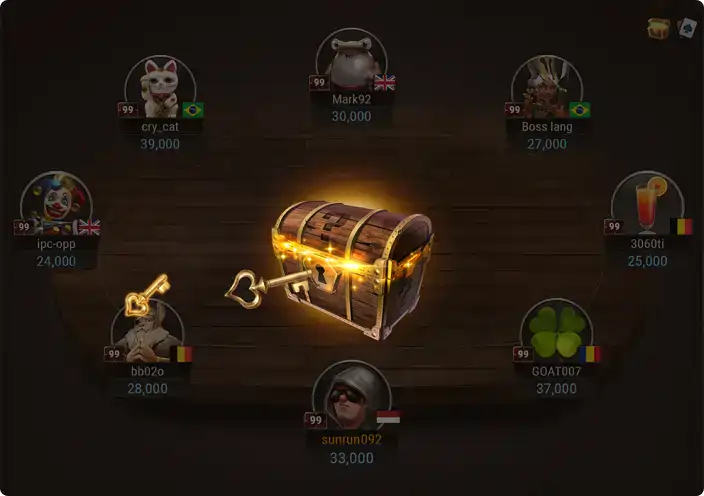
- Each remaining player receives a Mystery Bounty envelope
- Eliminating a player wins you their envelope
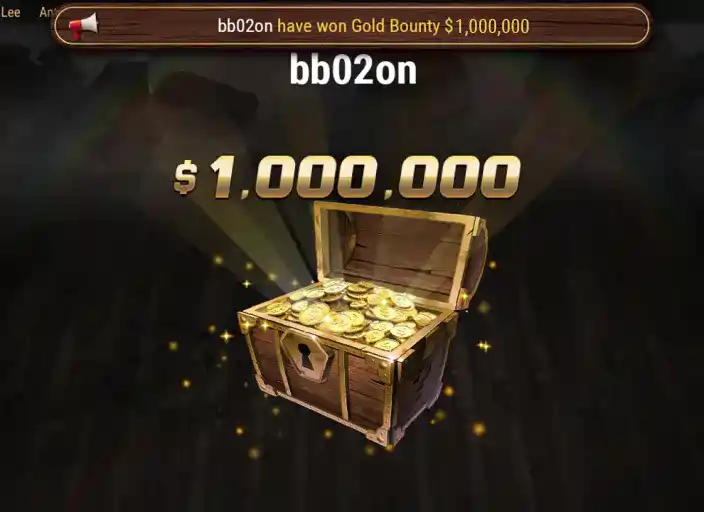
- Envelope values range from the minimum to a jackpot amount
Envelope Distribution
Mystery Bounty envelopes typically follow a distribution like:
| Envelope Value | Approximate Frequency |
| Minimum (often buy-in value) | ~60-70% |
| 2-5x buy-in | ~20-25% |
| 10-25x buy-in | ~5-10% |
| Massive jackpots | ~1-2% |
The exact distribution varies by tournament. Check the specific event’s information for details.
The Key Insight
Here’s what makes Mystery Bounty strategically interesting: you don’t know what an envelope is worth until you win it. Every opponent could be carrying the minimum or the maximum. This creates a different dynamic than fixed-bounty tournaments, where you know exactly what each elimination is worth.

Phase 1 Strategy: Building for the Hunt
The first phase is your setup for profitable bounty hunting. Play it correctly, and you enter Phase 2 in a dominant position.
Accumulate Chips Aggressively
Phase 1 plays like a standard tournament, but with a twist: chips become more valuable once Phase 2 starts because they enable bounty hunting. This means:
- Take more risks early to build a stack
- Value chip accumulation over mere survival
- A big stack entering Phase 2 is a massive advantage
Players who limp into Phase 2 with average or short stacks will not be able to hunt effectively. They become the prey.
Target Players Who Will Be Short at Phase 2
Identify players who are likely to enter Phase 2 with short stacks:
- They’re currently short-stacked and playing survival poker
- They’re tight and unlikely to accumulate chips
- They’re bleeding chips to the blinds and antes
Position yourself to eliminate these players early in Phase 2 when their bounties become active.
Avoid Marginal Gambles Near Phase 2 Transition
As Phase 2 approaches, be cautious with marginal spots:
- Entering Phase 2 is valuable as every remaining player will have a bounty
- Busting just before Phase 2 means missing all bounty opportunities
- Tighten up slightly as the transition approaches if your stack is healthy
Don’t sacrifice a playable stack on a coin flip right before bounties activate.
Phase 2 Strategy: The Hunt Begins
Once bounties are live, the game changes dramatically.
Calculating Bounty Value
Since envelope values are unknown, use the expected value (EV) of an average envelope for calculations:
Example: A tournament with $200 total bounty pool and 100 remaining players has an average envelope worth $2.
When deciding whether to call an all-in, add the average envelope value to your pot odds calculation. This makes calls significantly more profitable than in standard tournaments.
Calling Wider Against Short Stacks
Every short stack carries a bounty envelope. When they shove:
- You’re not just winning chips, you’re winning a prize
- The bounty improves your effective pot odds
- Marginal hands become profitable calls
Adjustment: Call all-in shoves from short stacks approximately 5-10% wider than you would in a standard tournament.
Covering Opponents
To win someone’s bounty, you must eliminate them. Focus on:
- Maintaining a stack that covers most opponents
- Avoiding situations where you’re the short stack
- Building chips so you can call without risking elimination yourself
The chip leader at each table has maximum bounty-hunting capability.
Isolation Play
When a short stack enters the pot, isolation becomes valuable:
- Raise to isolate them heads-up
- Prevent others from claiming the bounty
- Accept slightly negative chip EV if bounty EV compensates
Multiple players competing for the same bounty reduces your expected value. Control the field.
The Mystery Factor: Strategic Implications
The “mystery” aspect creates unique dynamics compared to standard knockouts:
Equal Treatment of All Bounties
Since you don’t know envelope values, treat all bounties equally based on average expected value:
- The recreational player’s envelope might be the jackpot
- The aggressive regular’s envelope might be the minimum
- No player is inherently more “valuable” to eliminate
This simplifies decisions—use EV calculations rather than targeting specific players for bounty size.
Jackpot Dream vs. Reality
The possibility of massive envelopes creates psychological effects:
In others: Some players overvalue bounty hunting, making reckless calls hoping for jackpots.
In yourself: Don’t let jackpot dreams justify bad decisions. The math doesn’t change based on what you hope is in the envelope.
Stay disciplined. Calculate based on average values, not best-case scenarios.
Information as You Progress
As envelopes are revealed throughout the tournament, you gain information:
- Large envelopes removed from the pool reduce the average remaining value
- If mostly small envelopes have been revealed, the remaining EV per envelope increases slightly
- Near the end, you can estimate the remaining envelope distribution
Adjust calculations accordingly, but don’t overweight this information as the impact is usually marginal.
Stack Size Strategies
Big Stack Play
With a big stack in Phase 2:
- Hunt aggressively: You can afford to call wider and absorb losses
- Pressure medium stacks: They can’t risk elimination against you
- Avoid other big stacks: Focus on profitable bounty opportunities, not ego battles
- Call short stack shoves liberally: The bounty makes almost any call profitable
Your stack is your weapon. Use it to collect envelopes.
Medium Stack Play
Medium stacks face complex decisions:
- Hunt short stacks: You can cover them without huge risk
- Avoid big stack confrontations: Unless you have a premium hand
- Protect your hunting capability: Don’t become a target yourself
- Stay aware of ICM: Balance bounty hunting against tournament equity
Be selective about which bounties to pursue.
Short Stack Play
As a short stack in Phase 2:
- Everyone wants your bounty: Expect wider calls on your shoves
- Tighten your shoving range: You’ll get called more often
- Look for double-up opportunities: A win transforms your situation
- Don’t wait too long: Fold equity disappears as your stack shrinks
Accept that you’re a target and adjust accordingly.
Common Mystery Bounty Mistakes
Overvaluing Jackpot Potential
Calling with 7-2 offsuit because “it might be the big envelope” is a losing strategy. Base decisions on average expected value, not dreams.
Ignoring ICM for Bounties
Bounties are valuable, but so is tournament equity. Near pay jumps, don’t sacrifice significant ICM equity for marginal bounty opportunities.
Passive Play Waiting for Short Stacks
Some players become passive, waiting for perfect bounty spots. Meanwhile, aggressive players build stacks and claim bounties. Stay proactive.
Forgetting Phase 1 Matters
Players who punt Phase 1 “because bounties aren’t active yet” enter Phase 2 crippled. Every hand affects your overall equity.
Tilting After Unlucky Envelope Reveals
You eliminate three players and get three minimum envelopes while someone else hits the jackpot. This feels unfair, but it is pure variance. Don’t let it affect your play.
Bankroll Management
Mystery Bounty tournaments have high variance due to:
- Standard tournament variance
- Random bounty distribution
- Possibility of massive jackpots or repeated minimums
Recommended bankroll:
| Risk Tolerance | Buy-ins Recommended |
| Conservative | 150+ |
| Standard | 100-150 |
| Aggressive | 75-100 |
The jackpot element adds upside variance but doesn’t reduce downswing risk. Budget accordingly.
Using GGPoker Features
Smart HUD
Use HUD data to identify:
- Tight players whose blinds you can attack
- Loose players you can value bet against
- Aggressive players who might shove light (profitable calling spots)
Hand History Review
After tournaments, review your bounty-related decisions:
- Were your calls correct given average envelope value?
- Did you miss profitable hunting opportunities?
- How did ICM and bounty considerations interact?
Key Takeaways
- Phase 1 sets up Phase 2: Accumulate chips to hunt effectively
- Use average envelope value: Calculate based on expected value, not jackpot hopes
- Call wider against short stacks: Bounty adds significant pot odds
- Cover your opponents: You need more chips to claim bounties
- Stay disciplined: The mystery element adds excitement but doesn’t change math
- Balance bounty and ICM: Tournament equity still matters
Start Hunting
Mystery Bounty tournaments combine the strategic depth of knockout poker with the excitement of random rewards. Every elimination matters, both for the chips and the envelope waiting to be revealed.
Find the next Mystery Bounty event on GGPoker’s tournament schedule. Approach Phase 1 with chip accumulation in mind, then hunt aggressively once bounties activate. Calculate your calls based on expected value, not winning a lottery.
The jackpots are fun when they hit. But consistent profit comes from making mathematically sound decisions, envelope after envelope. Hunt smart, and the big scores will come.
About the Author: Shawn Altbaum has been writing and editing in the online gaming industry since 2007, reporting live from the WSOP Main Event and conducting interviews with professional players. An active poker player, he combines industry expertise with firsthand knowledge of the games he covers. He currently serves as Global Head of Copywriting at NSUS Group, overseeing brand voice and content strategy across GGPoker and GGVegas.