So, You Want to Become a Pro
A professional poker player is a player who can pay either all or the majority of their bills and expenses with their winnings from the poker table.
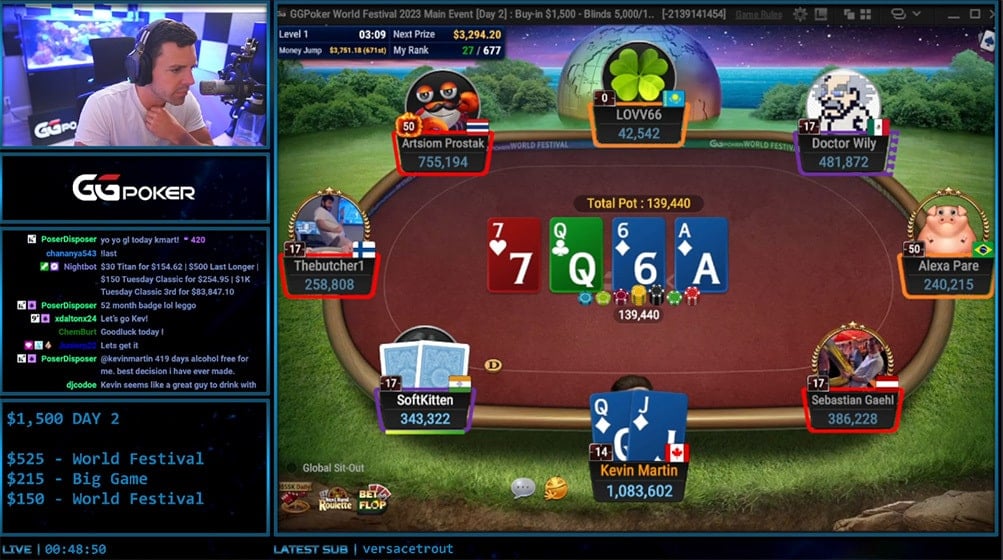
For this reason, many of the best and most intelligent professional poker players have realized the need to create multiple income streams from the game. These players supplement their poker earnings with secondary income sources, like live streaming on Twitch. They are increasing the number of revenue streams to ensure their livelihood, essentially killing two birds with one stone.
They simultaneously earn money from playing poker and through other means like Twitch subscriptions, merchandise sales, and affiliate deals.
The Reality and Challenges of Professional Poker
Many people imagine that living the life of a professional poker player is a dream. You spend days doing what you love, with no boss hanging over your shoulder, and you set your working hours, which can be even more enjoyable when you play poker with friends.
I won’t deny that it is dreamlike; however, becoming a professional poker player in today’s competitive environment is challenging. It’s more complicated than you would think.
Poker is a game of skill, but it’s easy to understand, and immediately start playing once you have mastered the basics. You can play and win a few pots within minutes of learning the game, but it will take a lifetime of playing poker to master the game.
Playing poker recreationally is different from relying on it as your primary source of income. So naturally, you need to approach the game differently to adjust for this shift.
These days, there are a ton of resources from which you can learn poker. If you want to take it seriously, there are various poker training sites and free videos on YouTube to improve your game.
Before you decide to become a professional poker player, you should demonstrate consistent success at the level of play you’re currently engaged in, especially if you’re considering playing online poker real money.
The Reality Check: Evaluating Your Own Poker Skills
Be honest with yourself. If, as a player, you’ve been barely winning or have been a break-even player for years, choosing to become a professional poker player will not change your results. No amount of positive thinking will help you suddenly become a master of the game. Therefore, if you’re considering this lifestyle, start by playing poker as a side hustle without putting undue pressure on yourself.
When playing poker for a living, you need to treat it like you would if you were running your own business. Just as you would only start a business with appropriate startup capital, you should only pursue professional poker with a sufficient bankroll, since embarking on either venture without adequate funds would be nearly impossible. Even when playing at low stakes, the costs associated with poker—like food, lodging, and bad runs—can add up.
When you decide to make a move and become a pro, game selection is one of the most essential things. Choosing the right table can be one of the most important decisions regarding maintaining profitability.
You’re playing poker for a living to make money, not to prove you’re the best. Only consider moving up to face more difficult opposition when you have built a solid bankroll and can live comfortably.
Strategic Game Selection and Risk Management
Stick to soft games against fish. That’s where you’ll make your money. Proving that you’re a great player is pointless, as the risk at this point is not worth the gains – if you lose your entire bankroll, your professional poker player career could end. Winning at poker, professionally, is all about paying the bills. It is not about showing how great a player you are or that you can bluff anyone anytime.
Always have a routine before starting your session. Do your workout, study regularly, watch what you eat, and get enough sleep. Whatever your routine consists of, keep it the same. It will help you maintain your focus on the game. Any edge you can take will increase your chances of winning.
It’s imperative not to start a session when you are tired, particularly online and late at night. Your play will suffer when you are sleepy, as you will likely miss out on vital information from your opponents, and you could give out too much information about yourself.
Moreover, it’s far too easy to fall asleep and get blinded out when you enter an online poker tournament. Almost nothing is worse than waking up in front of your computer after a restless nap and being greeted with a pop-up message on-screen, “You have been eliminated.” We’ve all done it at some point.

Embracing a Learning Mindset and Managing Bankroll
Embrace a perpetual learning mindset. It is a critical key for anyone who wants to go pro in poker because the game continues to evolve. You will only last as a poker pro if you constantly study the newest strategies. Always be willing to adapt to a new strategy, as those who refuse will inevitably lose.
Another important thing that a poker professional must do is manage their bankroll. Remember, without a bankroll, you cannot play.
Regardless of whether you play cash games or tournaments, your bankroll must influence your buy-ins. If you play too high, you risk going bust. When you get good enough and have the bankroll, the high-stakes games will await you, but only when you’re ready.
Consistency is another significant factor we must consider as we work towards becoming better players and playing professionally.
Playing poker regularly will help you develop as a player and stay sharp. As you aspire to become a professional poker player, you must study, play lots of hands, and review your hands to gain the experience and knowledge necessary to beat your opponents. As you learn, you will find errors in your game. Plug those leaks as you find them.
Final Advice
Poker is a game of risk, like any form of gambling. Whenever you gamble, there is a risk of loss. That’s part of what makes it so enjoyable. There are no guarantees, and most players will not reach the upper echelons of the poker world, the same as any sport. Poker is a great game; the most successful pros make enough to live comfortably. Remember that strong discipline and good bankroll management will ensure you know when to stop for the day. Chasing losses tempts everyone, but trust your overall edge and come back to fight another day. Try to think of poker as a long-term game; luck will only affect it in the short term. And finally, when you’re ready to play poker for a living, go for it and have fun at the tables.
Thank you for reading!
About the Author: Jackpot is a 28 year-old professional poker player from Iran. After studying computer programming, Jackpot made the jump to poker and now specializes in micro-stakes.
About the Author: Shawn Altbaum has been writing and editing in the online gaming industry since 2007, reporting live from the WSOP Main Event and conducting interviews with professional players. An active poker player, he combines industry expertise with firsthand knowledge of the games he covers. He currently serves as Global Head of Copywriting at NSUS Group, overseeing brand voice and content strategy across GGPoker and GGVegas.