
The Nosebleeds: Andrew Robl, Tom Dwan, Patrik Antonius and Phil Galfond

For a few years in the late 2000s, the most exciting game in poker wasn’t on television. It was a set of numbers on a screen, updating in real time, as two players moved more money across a virtual table in a single hand than most people earn in a year. These were the nosebleeds: the highest-stakes online cash games ever spread, where a handful of players sat down against each other for stakes almost nobody else on earth could afford to contest.
Thousands watched from the rail, following the biggest pots the way other people follow a title fight. The four players here were the main event. They turned online screennames into household names, played the largest pots the game had ever seen, and made the nosebleeds into something the whole poker world stopped to watch.
Andrew Robl, the Quiet Grinder
Andrew Robl was born on September 27, 1986, in Okemos, Michigan, and came to the game the way most of his generation did: watching the World Series of Poker on ESPN and deciding he wanted in. He started online, found early success, and then learned the harder half of the lesson, going broke more than once before his bankroll and his discipline caught up to his ambition.
At 21 he moved to Las Vegas, the only sensible address for someone who wanted to play the biggest games in the world. His first real television exposure came in 2008 on NBC’s “Poker After Dark,” and from there he became a fixture in the high-stakes cash games of Las Vegas and Macau, the rooms where the real money in poker quietly changes hands.

The tournament record is solid on its own. His biggest win came at the 2013 Aussie Millions $100,000 Challenge, worth $1,055,699, part of a career that has passed $5.6 million in live earnings across eighteen years of cashing in the toughest events on the calendar. But Robl may be best remembered for a hand he lost. At the PartyPoker World Open VI, he flopped quad nines, got the money in, and ran into Toby Lewis’s quad queens, a cooler so absurd it became one of the most replayed moments in televised poker.
Robl’s game is built on math and patience rather than theatrics. “Poker is a game of skill, but it’s also a game of managing emotions and staying calm under pressure,” he once said, and his career is a long argument for that idea. The cash-game results that never make a leaderboard are the real measure of him.
Tom Dwan, the One They Called durrrr
Thomas Dwan Jr. was born in Edison, New Jersey, on July 30, 1986, a math-club kid who played soccer, tennis, and a lot of cards. He turned a small stake into a bankroll, then into a legend. Under the screenname “durrrr,” a name he picked specifically to needle the people who lost to him, he became the most feared player in the highest online games in the world. By his early twenties he had won more than $10 million online.
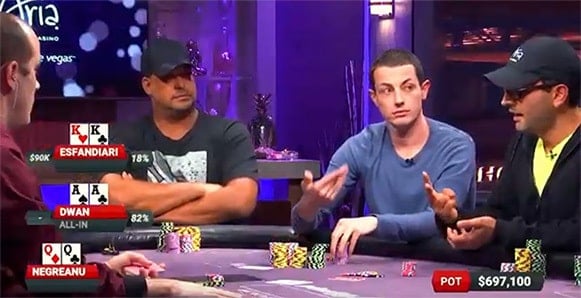
The stories from that era still sound made up. A “quick session” meant six tables with the smallest game running at $100/$200 No-Limit Hold’em. One roommate told Bluff Magazine he’d watched Dwan make over $200,000 in under an hour. His reputation grew so fast that regulars stopped wanting to play him, so most of his action came from pre-arranged heads-up matches against the only people willing to sit down: names like Phil Ivey, Patrik Antonius, and Viktor “Isildur1” Blom.
In January 2009 he made the challenge that defined the era. Dwan offered to play anyone in the world, one exception aside, over 50,000 hands of heads-up No-Limit Hold’em or Pot Limit Omaha at 200/400 or higher, and he laid odds on himself: he’d pay $1.5 million if he lost, and collect only $500,000 if he won. The one name he refused to include was Phil Galfond. The “durrrr Challenge” became poker’s most famous open bet, and it would take two players to answer it.
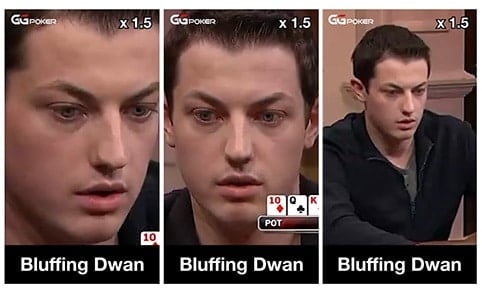
His live game holds up alongside the online myth: over $6 million in earnings, a fourth-place WPT finish in 2007, a runner-up in the 2010 WSOP $1,500 No-Limit Hold’em for $381,885, and an eighth-place finish at the Triton Super High Roller Series London worth $793,775, his largest live score. In 2024 he finally recorded his first WSOP Main Event cash, ending a long drought and reaching the middle of Day 4 before busting. And in May 2023 he wrote himself back into the record books, winning the largest pot in televised poker history, a $3.1 million monster on Hustler Casino Live’s “Million Dollar Game,” when his queens held against a table full of aggression.
Patrik Antonius, the Ice-Cold Finn

Patrik Antonius was born in Helsinki, Finland, on December 13, 1980, and was supposed to be a tennis player. A serious back injury at fifteen ended that plan, and he channeled the same competitive drive into poker instead. His preferred game was Pot Limit Omaha, the most volatile game in the building, which tells you something about his appetite for a fight.

He came up under the Dutch pro Marcel Lüske, part of a group called the “Circle of Outlaws” that sharpened his game quickly. By 2005 he was posting serious results on the European Poker Tour and World Poker Tour, including a third-place finish at EPT Barcelona and a win in Baden bei Wien. On “High Stakes Poker” and “Poker After Dark” his stillness became his signature, never more so than in a legendary televised pot against Sammy Farha that he took down for $749,100.
He also answered the durrrr Challenge. Antonius was the first to sit down against Dwan, and though he eventually bought his way out of the bet after some 40,000 hands with Dwan more than $2 million ahead, the willingness to take it on at all said everything about him. He was, after all, the man who in 2009 won what was then the biggest pot in online poker history: $1,356,946 in a single head-to-head hand against Isildur1. Today he lives in Monte Carlo, still turns up in the biggest cash games and Triton events, and coaches the players trying to reach the level he set. His live earnings have passed $19.5 million, with a largest single cash of $3,153,551.
Phil Galfond, the One Dwan Wouldn’t Play
When Tom Dwan offered to play anyone in the world, he named a single exception. This is him.
Phil Galfond was the one opponent even durrrr wanted no part of, and the reason was simple: in Pot Limit Omaha, the most volatile game in the building, Galfond was the best there was. Online he played as “OMGClayAiken,” and his sessions in the highest cash games on the internet became required study for everyone chasing him. He was not the loudest name at the nosebleeds. He was the one the other sharks quietly agreed to avoid.
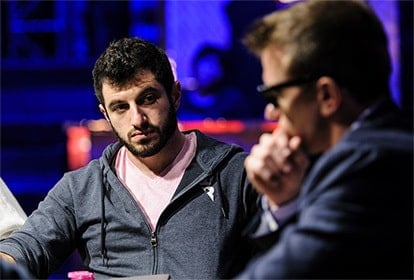
Galfond came to the game the way a lot of his generation did, through a laptop rather than a card room. Born in Maryland in 1985, he was a philosophy student at the University of Wisconsin-Madison when a friend’s $30,000 online score made him take poker seriously. He started with a $50 deposit, went broke, deposited another $50, and this time built it into a living, grinding sit-and-goes into cash games and cash games into the biggest stakes online poker had ever spread.
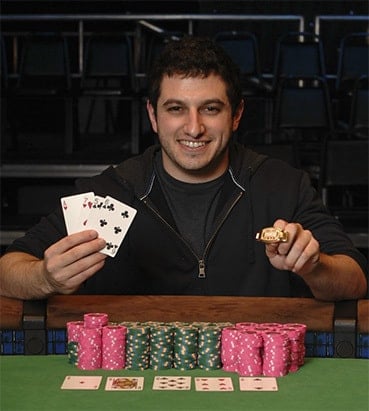
The live record backs up the online myth. Galfond has won three WSOP bracelets, and tellingly, not one of them came in No-Limit Hold’em. His first, in 2008, was a $5,000 Pot Limit Omaha title worth $817,781. He added a $10,000 2-7 Single Draw Lowball championship in 2015 and a $10,000 Pot Limit Omaha Hi-Lo championship in 2018, a spread across the hardest mixed disciplines the game offers. His live earnings sit close to $3 million, but for a cash-game specialist the tournament trophies were always beside the point.
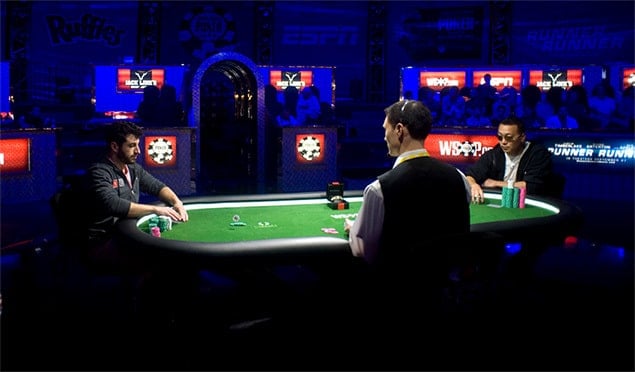
What set Galfond apart was what he did with his standing. In 2019 he launched Run It Once Poker, an online room built around protecting recreational players instead of feeding them to the sharks, a direct rebuke to how the sites he grew up on were run. The venture proved harder than the games, and he wound down its global operation in early 2022, but the coaching brand he built alongside it, Run It Once Training, reshaped how a generation learned to play.
And then he answered the durrrr Challenge in his own way. In 2020 he issued the “Galfond Challenge,” inviting the world’s best to long, high-stakes heads-up Pot Limit Omaha matches, streamed live, with his own bankroll and reputation on the line. In the most famous of them, against the anonymous European pro “VeniVidi1993,” Galfond fell behind by nearly a million dollars before staging one of the great comebacks the game has seen, clawing all the way back to win. The man Dwan would not play had become the one issuing the challenges.
The Nosebleed Generation
Robl, Dwan, Antonius, and Galfond moved more money across a poker table than most casinos see in a night, and they did it against each other, in games so high that watching them was the closest most fans would ever get. One built a quiet, decades-long case at the cash tables. One turned a screenname into the most feared word in the game. One brought a tennis player’s poise to the wildest game in the room. One was the name too dangerous to invite, who answered by building a fairer room of his own.
The stakes eventually cooled, the sites changed, and the rail moved on to the next thing. But the pots those three played are still the ones people bring up, and the reason is simple. When the money was biggest, they were the ones sitting down. That is what a nosebleed specialist is: not the loudest player in the room, but the one still in the game when everyone else has found a reason to leave.
👉 Use Referral Code: WINBIG 👈PLAY NOW!
About the Author: Shawn Altbaum has been writing and editing in the online gaming industry since 2007, reporting live from the WSOP Main Event and conducting interviews with professional players. An active poker player, he combines industry expertise with firsthand knowledge of the games he covers. He currently serves as Global Head of Copywriting at NSUS Group, overseeing brand voice and content strategy across GGPoker.