
The Big Game: Barry Greenstein, David Oppenheim, Ted Forrest, Eli Elezra and Chip Reese

Poker keeps its official history in tournament results: bracelets, titles, the champions crowned on television. But there was always another history, unrecorded and far richer, that ran in the cash games. Away from the cameras, in rooms like Bobby’s Room at the Bellagio, a small circle of professionals played the highest-stakes mixed games on earth, night after night, for sums that dwarfed most tournament prizes. They called it the Big Game, and the five men here were its masters. Some of them won bracelets too, but that was almost beside the point. In the cash games there is no trophy and no leaderboard, only the money and the respect of the people across the table — and that respect is the hardest thing to earn in poker. Every one of them earned it. One of them earned more of it than anyone who has ever played.
Barry Greenstein

Barry Greenstein came to the Big Game by an unusual road, and left most of his winnings behind him. Born in Chicago in 1945, he was a computer science graduate who spent the better part of a decade chasing a mathematics Ph.D. while grinding poker at night, then set both aside for Silicon Valley, where he was an early employee at the software company that became Symantec. Family medical bills pulled him back to the table. In 1990 he quit the tech world to play full-time and pay for his family’s care, and he turned out to be one of the finest cash-game players of his generation.
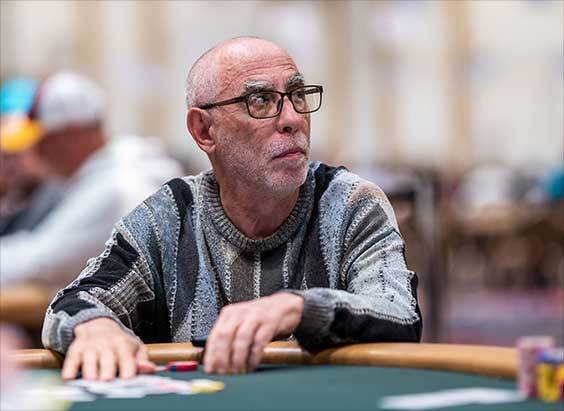
The tournament record is real — three WSOP bracelets, none of them in Hold’em, two World Poker Tour titles, more than eight million dollars in earnings — but it is not why the poker world calls him “The Robin Hood of Poker.” Greenstein made a practice of giving his tournament winnings away, donating them to children’s charities, once handing over more than $440,000 from a single score. He wrote one of the most respected strategy books of its era, Ace on the River, along with a chapter of Doyle Brunson’s Super/System 2, and he became a fixture on High Stakes Poker and Poker After Dark, where television audiences finally glimpsed the private world he lived in.
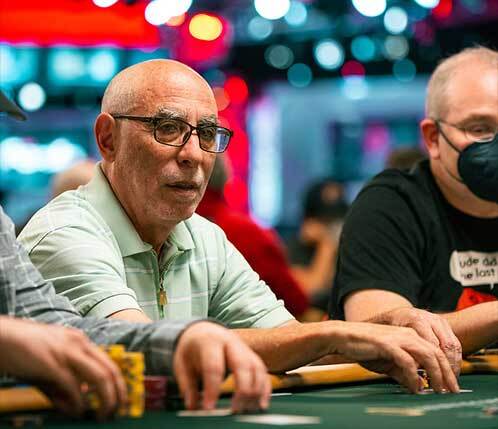
He was inducted into the Poker Hall of Fame in 2011. But among the players who sat with him in the biggest games, Greenstein’s reputation rested on something simpler than results or philanthropy: he was very hard to beat, and he never made it personal.
Ted Forrest

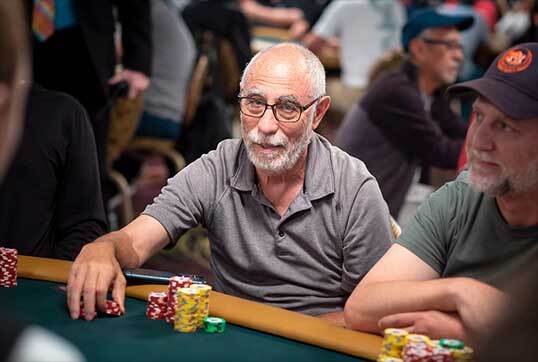
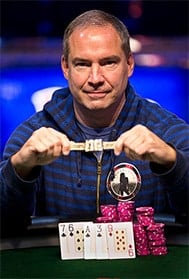
If Greenstein was the Big Game’s conscience, Ted Forrest was its daredevil. A gifted athlete from upstate New York, Forrest built his early bankroll in brutal marathon cash sessions — he once turned a single Razz game into a 25-hour grind for a $20,000 profit — and announced himself to the tournament world in 1993 by winning three WSOP bracelets in a single summer, a feat only a handful of players have ever matched. He would win six in all, the last in 2014 at the age of fifty, beating Phil Hellmuth heads-up in a Razz event.
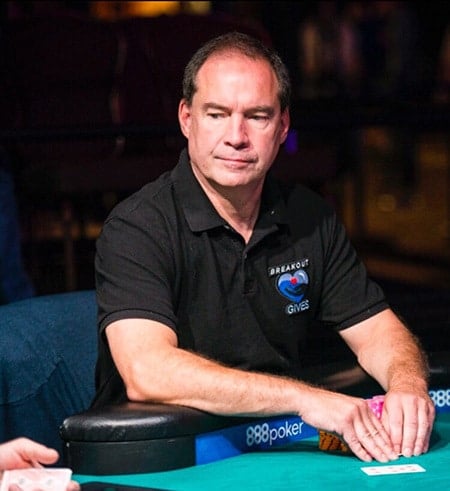
But Forrest earned his living, and his legend, in the cash games and the prop bets that surrounded them. Nicknamed “Professor Backwards” for a style built on doing the opposite of what the table expected, he was the kind of gambler who could not turn down a dare. He won $10,000 for a standing backflip, $7,000 for running a marathon in 115-degree desert heat, and permanently injured his arm losing a bench-press bet. He played heads-up against the billionaire Andy Beal as part of the syndicate profiled in The Dealmakers, and he once sat down with Barry Greenstein for a Chinese poker match that ran a full month and ended with Forrest up a million and a half dollars.
That was the Big Game world in miniature: enormous sums, iron nerves, and a willingness to bet on anything, including yourself. Few embodied it more completely than Forrest, who treated the whole enterprise as one long, high-variance adventure and rarely seemed to lose a night’s sleep over the swings.
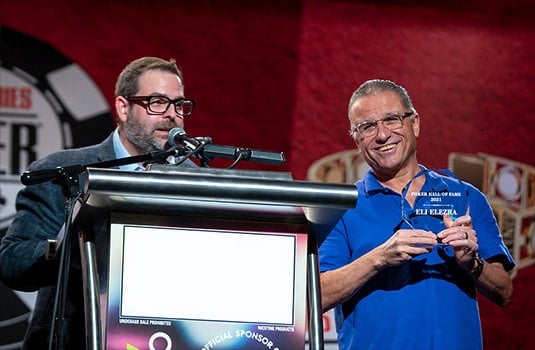
Eli Elezra

Eli Elezra bet on himself long before he ever sat in the Big Game. Born in Jerusalem in 1960, he served as a lieutenant in the Golani Brigade, one of Israel’s elite military units, until a leg wound in the 1982 Lebanon War ended his army career and, from a hospital bed, pointed him toward poker. He emigrated to the United States, worked his way up from gutting fish in Alaska to running a film-processing business in Las Vegas, and eventually owned more than twenty retail businesses in the city. The bankroll and the free time led him, inevitably, to the highest games in town.
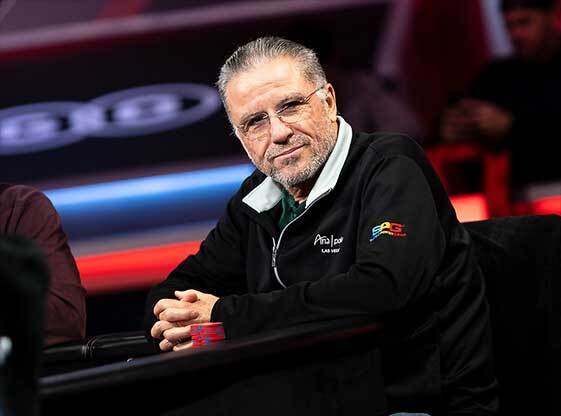
Elezra became a mainstay of Bobby’s Room and a familiar face on High Stakes Poker, and he backed his cash-game reputation with five WSOP bracelets, most of them in the older stud and draw games the Big Game favored. His fifth, a Pot-Limit Omaha Hi-Lo championship worth more than $600,000, came in 2022. The most Elezra story, though, is a side bet: before the 2007 series he wagered $25,000 at ten-to-one that he would win a bracelet that year, then went out and did it, collecting $250,000 on the wager — more than the event itself paid.
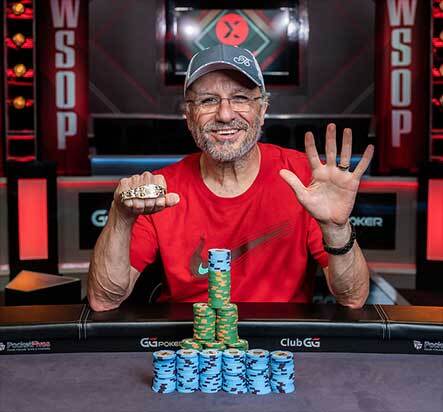
He was inducted into the Poker Hall of Fame in 2021. For a man who nearly became a career soldier, he found a second front that suited him just as well.
David Oppenheim

If you want the purest expression of what the Big Game was, look at David Oppenheim, because the public scoreboard barely shows him at all. Born in Los Angeles in 1973, Oppenheim was playing cash games at the Bicycle Club by sixteen and spent his career doing one thing better than almost anyone: beating the highest cash games in the world, quietly, for decades. His live tournament earnings sit around two million dollars, a rounding error by the standards of this group, because tournaments were never the point for him.
And yet, in 2019, the poker world inducted him into the Hall of Fame, in the same class as Chris Moneymaker from The Boom Years. Consider that pairing for a moment. Moneymaker got in for a single televised win that changed the game forever. Oppenheim got in with no bracelet and no major title at all, honored purely for a body of work that unfolded in private rooms, witnessed only by the handful of people good enough or rich enough to sit across from him. There is no cleaner illustration of the thesis these players all embody: in the cash games, the only record that counts is the one kept by your peers. And Oppenheim’s peers, the best players alive, voted him in.
Chip Reese

Which brings us, finally, to the player all the others measured themselves against. David “Chip” Reese was, by the near-unanimous verdict of the people who played with him, the greatest cash-game player who ever lived. A homeschooled kid from Dayton, Ohio, who turned down Harvard for Dartmouth, Reese drove to Las Vegas after college with $400 and a plan to attend law school, lost the $400 at blackjack, and never left. Within a summer he had run a small stake into six figures. Within a few years he was the man to beat in the biggest games in the world.
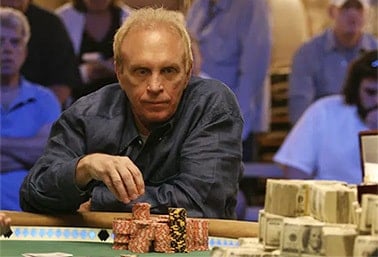
Reese was the best seven-card stud player anyone had seen — Doyle Brunson had him write that chapter of Super/System — and a regular in the Big Game at stakes that ran to $4,000/$8,000, sitting for days on end against Doyle Brunson, Johnny Moss, and the syndicate that took on Andy Beal in The Dealmakers. He was also, everyone agreed, a gentleman who never tilted, and a father first: he once walked away from a game while stuck $700,000 to make his son’s little league game. In 1991, at forty, he became the youngest player ever inducted into the Poker Hall of Fame, a record that stood until Phil Hellmuth broke it. In 2006 he won the inaugural $50,000 H.O.R.S.E. event, the toughest test in poker, confirming his standing as the finest all-around player of all.
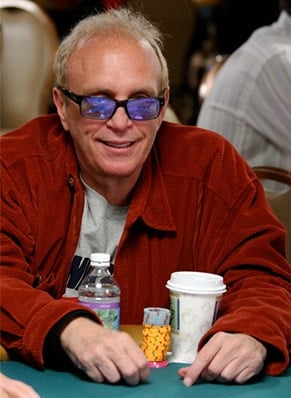
Chip Reese died in 2007, at fifty-six. Doyle Brunson’s verdict was simple: “He’s certainly the best poker player who ever lived.”
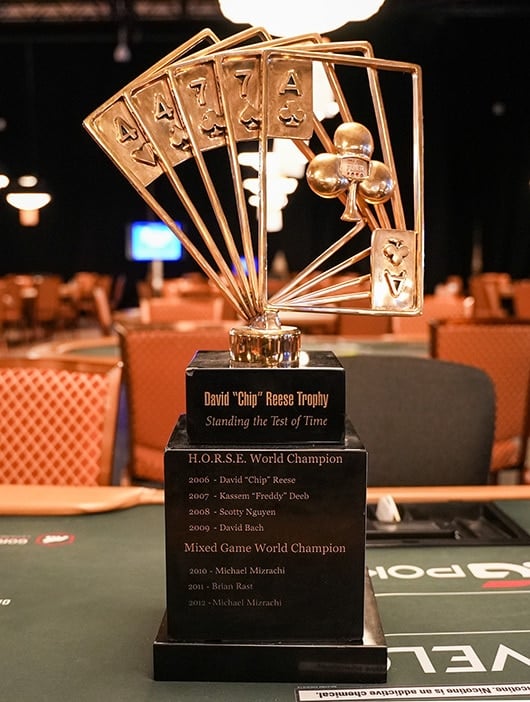
The Reese Trophy
The cash games never handed out trophies. That was the whole point of them: the money was the scoreboard, and the respect of the table was the prize. Which makes the way poker chose to honor Chip Reese perfectly fitting. Since his death, the winner of the $50,000 Poker Players Championship, the modern version of the event he won in 2006, takes home the David “Chip” Reese Memorial Trophy. Every year, the best all-around players in the world compete for a prize named after the best of them all. Greenstein, Forrest, Elezra, Oppenheim, and Reese never needed a camera to know who they were. Their peers always knew, and in the Big Game that was the only audience that ever counted.
👉 Use Referral Code: WINBIG 👈PLAY NOW!
About the Author: Maury Orton is a poker writer and editor contributing to GGPoker. He focuses on clear, reliable explanations of the game, drawing on years of experience in online poker media and digital publishing.