
Colorful Characters: Dave Ulliott, Jeff Lisandro, Max Pescatori, and Marcel Lüske

Poker‘s history was written mostly in America, but plenty of its most vivid characters came from well outside it. This group gathers four of them — an Englishman, an Italo-Australian, an Italian, and a Dutchman — who brought as much personality to the table as they did skill. Orange sunglasses, upside-down shades, knuckle-duster rings, a nickname earned at a corner-store gum counter. The results were real, but so was the show.
Dave ‘Devilfish’ Ulliott

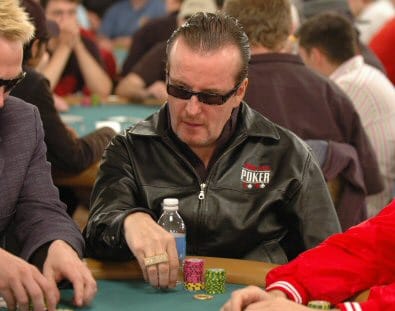
Dave Ulliott was English poker’s first real crossover star, and he looked the part: orange-tinted sunglasses, a leather jacket, and gold knuckle-duster rings spelling out “Devil” and “Fish.” Born in Hull in 1945, he was a hustler almost from the start. The story he liked to tell had him at five years old, repackaging gravy cubes as a popular sweet and selling them to other kids at half price — less for the money, he always said, than for the thrill of getting away with it.
That itch for the buzz shaped the rest of his life. He found poker young, in family home games, and it wasn’t long before he placed his first real bet, a horse at 50-to-1 that paid him two weeks’ wages. He also spent time on the wrong side of the law, with a few stretches in jail for fraud and robbery, before he gave up crime for the gambler’s life full-time. Teamed with a friend, Gary Whitaker, who drove him around the country for a cut of the winnings, Ulliott ground out a living in cash games from one English city to the next.
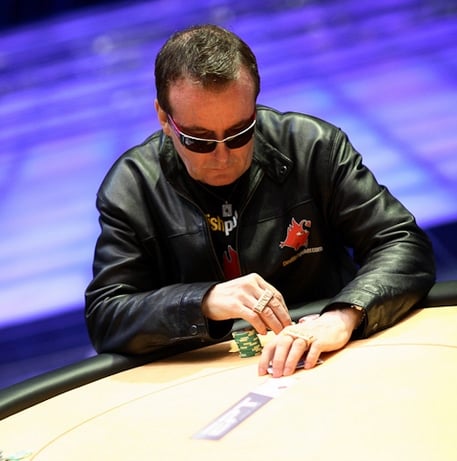
His big break came in Las Vegas. The nickname came from the fugu, the Japanese pufferfish that’s lethal if it isn’t prepared just right, and it stuck in 1997 after he beat Men “The Master” Nguyen at the Four Queens. That same trip he won a WSOP bracelet in the $2,000 Pot-Limit Hold’em event for $180,310, had it engraved with the name, then ran his cash-game winnings past $700,000 before he flew home.
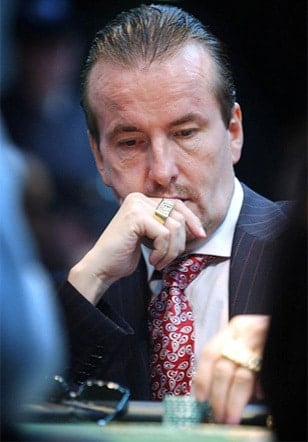
Television did the rest. Ulliott was the breakout personality of Channel 4’s Late Night Poker, the show that popularized the hole-card camera and drew a million and a half viewers to watch him win its first season in 1999. In 2003 he took the WPT’s Jack Binion World Poker Open, knocking out most of the final table himself and beating Phil Ivey heads-up in a run Mike Sexton called the most dominating in WPT history. His biggest single score came in 2007, a third-place finish in the WPT Doyle Brunson Classic for $674,500, part of a career worth around $6 million. Ulliott died in 2015 at 61, and was inducted into the Poker Hall of Fame two years later. He told the whole story, the con jobs included, in a 2011 autobiography, Devilfish: The Life and Times of a Poker Legend.
Jeff ‘Iceman’ Lisandro
Jeff Lisandro is the quietest player on this list and, by one measure, the most decorated. The Italo-Australian from Perth built his living in cash games and treated tournaments as an occasional sideline, yet he owns six WSOP bracelets — the most of any non-American other than Daniel Negreanu — along with roughly $5.7 million in live earnings that place him among Australia’s all-time money leaders.
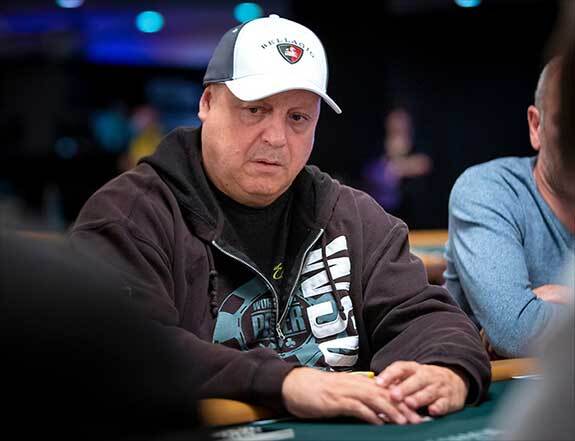
The nickname is less dramatic than it sounds. Lisandro chewed gum to cover his tells, and bought so much of one brand — “Ice” — from a casino corner store that the cashier started calling him the Iceman. It fit anyway.
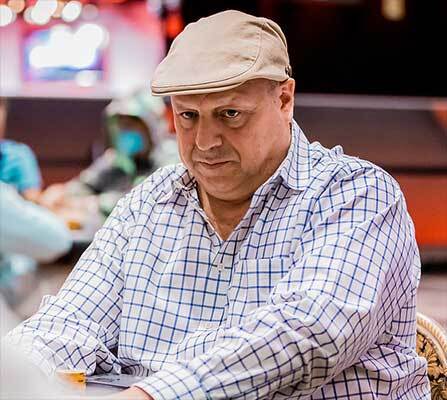
He turned pro at 18 and spent years collecting modest cashes before it clicked. The breakthrough came in 2004, a run of deep finishes capped by a win in a $25,000 Heads-Up Limit Hold’em event, where he beat Howard Lederer for $194,000. Two years later came the largest cash of his career, 17th in the 2006 WSOP Main Event for $659,730 — a run remembered as much for a heated dispute with Prahlad Friedman, who wrongly accused him of skipping an ante and called him a thief. Lisandro, whose family hails from Italy, defused it with a line for the ages: when another player mentioned an upcoming trip there, he told him to take Friedman along.
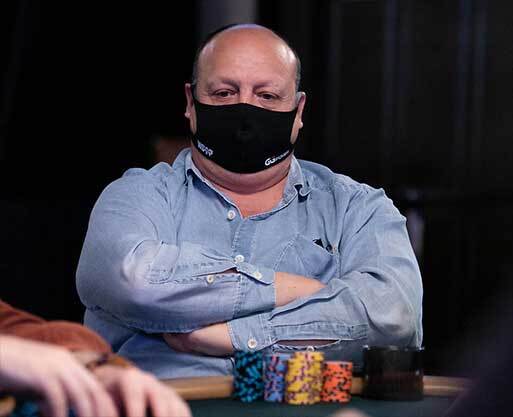
The bracelets came in a steady march, the first in 2007, but 2009 is the summer that made his name. Lisandro won three in a single series, one each in Seven Card Stud, Stud Hi-Lo, and Razz, the first player ever to sweep three stud bracelets in one summer, and took Player of the Year for it. Two more followed, at the WSOP Europe in 2010 and the Asia-Pacific series in 2014. Like Ulliott, he owns a heads-up win over Phil Ivey, from a 2005 WSOP Circuit event in Lake Tahoe worth $542,360, and he sits in the Australian Poker Hall of Fame.
Max ‘The Italian Pirate’ Pescatori
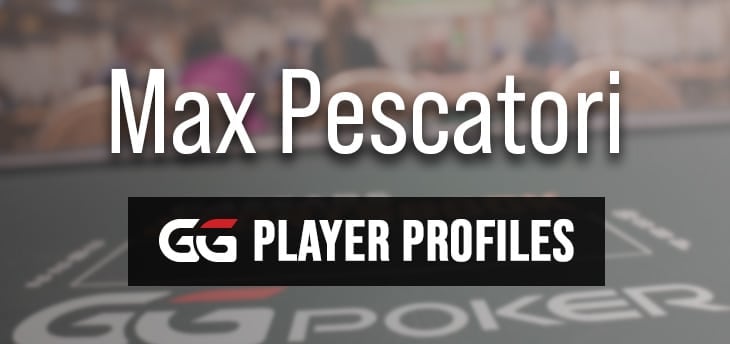
Massimiliano Pescatori left Milan for Las Vegas in 1994 and took a job dealing cards, which is a common enough origin story, except that he actually made the leap to the other side of the table. He started in seven-card stud, learned under Valter Farina — the first Italian to win a WSOP bracelet — and by the end of the decade was a working pro.

His first real splash came in 2003, when he won two events at the World Poker Challenge in Reno, in Limit Hold’em and Omaha Hi-Lo. The bracelets followed. The first, in 2006, came in a $2,500 No-Limit Hold’em event on the same weekend Italy won the World Cup, a coincidence he has never been shy about mentioning. A second arrived in 2008, and then, in a single 2015 series, he reeled in two more, in Razz and the $10,000 Seven-Card Stud Hi-Lo Championship.
Four bracelets and roughly $4.5 million in cashes make Pescatori the most successful Italian tournament player of his generation. The “Italian Pirate” nickname captures the approach — bold, well-traveled, always hunting the next score — and away from the table he brings the same competitive streak to horse racing and tennis.
Marcel ‘The Flying Dutchman’ Lüske

Marcel Lüske came to poker late. He was already in his late thirties, having spent years running bars and clubs in Amsterdam, before he took the game seriously — and it did not slow him down. Within two years he was the top-ranked player in Europe, and he was twice named European Player of the Year, in 2002 and 2004. The “Flying Dutchman” nickname came from how much of the world he covered chasing tournaments in those early years.

He is remembered as much for his style as his results. Immaculately dressed, sunglasses worn upside-down so he could still read the table with his head tilted down, Lüske hummed and sang to himself between hands — a genuine musician away from the felt, and an incurable showman at it. His deepest WSOP runs included a tenth-place finish in the Main Event and a runner-up in a $5,000 Seven Card Stud event.
His lasting mark, though, is off the table. Frustrated by the patchwork of house rules that changed from one room to the next, Lüske founded a European governing body in 2002, then in 2007 the Federation Internationale de Poker Association, or FIDPA, and wrote a single set of International Poker Rules that many major card rooms still use. The following year, the European Poker Awards handed him a Lifetime Achievement honor. He also, for what it’s worth, holds a black belt in karate.
Four countries, four very different acts, one shared trait: none of them was ever hard to spot at a poker table. The game has always needed players like these as much as it needs the quiet technicians — arguably more.
👉 Use Referral Code: WINBIG 👈PLAY NOW!
About the Author: Maury Orton is a poker writer and editor contributing to GGPoker. He focuses on clear, reliable explanations of the game, drawing on years of experience in online poker media and digital publishing.