
Playing Card Art and History
Playing cards started in China, but almost nothing about the deck in your hand today traces back to that origin. Germany reshaped the suits, England taxed one card into prominence, America turned the back of the deck into advertising space, and a discarded trump card from a 19th-century game became the Joker. None of that changes how a hand plays out, but it’s worth knowing where the fifty-two cards actually came from before you next shuffle them.
German Innovation and English Refinement
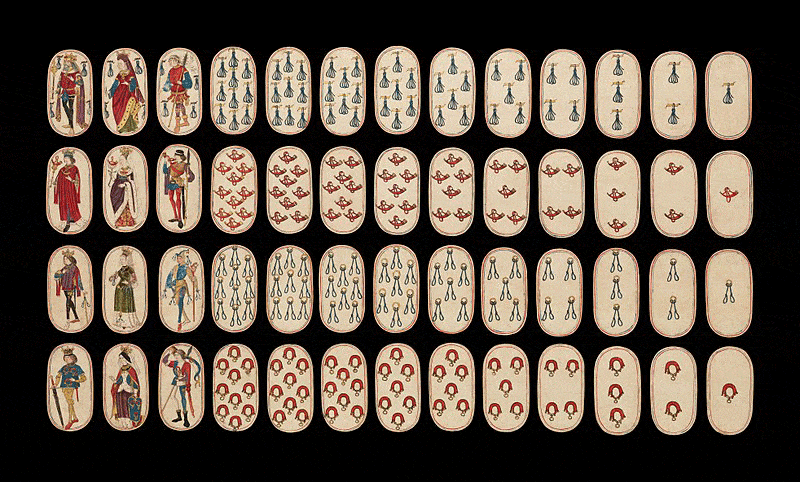
Germany played a crucial role in mass-producing cards, thanks to their wood-cutting and engraving techniques. They even influenced the design of suits, introducing rural life symbols like hearts, leaves, acorns, and bells. Across the channel, England left its mark by renaming the suits and making the Ace of Spades a card of prominence due to tax laws.
Playing Cards in America
In the United States, playing cards took on a new life. The 19th century saw them become mediums of advertising and icons of the Wild West, and the country turned into a haven for collectors along the way, with cards ranging from sports legends to popular fandoms.
The Artistic Evolution: From Classical to Contemporary
Playing cards have been a canvas for artistic expression throughout their history, from hand-painted decks with ornate patterns to modern cards pushing creative boundaries. New designs keep emerging, some leaning on tradition, some breaking from it, and that push and pull is most of what keeps the format interesting.
The Joker
The Joker is the one card in a standard deck that started life as something else entirely. It originated in the 1860s in America as the trump card in Euchre, first called the Best Bower, and the name Joker is generally traced to “Juker,” the German term for that same game. From there its role kept expanding, into Canasta and Poker among others, usually as a wild card. By the late 1940s, two Jokers per deck was standard, which tells you how quickly the card earned its keep.
Manufacturers have never agreed on what a Joker should look like, and that’s exactly why it’s become a favorite for collectors. Depending on the deck it’s a whimsical jester, a clown, or whatever cultural reference the manufacturer felt like leaning into that year, and rare or unusual versions get sought after specifically because there’s no fixed template to compare them against.
👉 Use Referral Code: WINBIG 👈PLAY NOW!
Card Backs Have Their Own History
Card backs get treated as an afterthought, but they’ve had a design history of their own the whole time, one that’s just as interesting as whatever’s printed on the front. It’s also worth remembering that the appeal of a physical deck, back design included, is tied up in the same reason people still play poker with friends around an actual table instead of a screen.
The Artistic Revolution of Card Backs
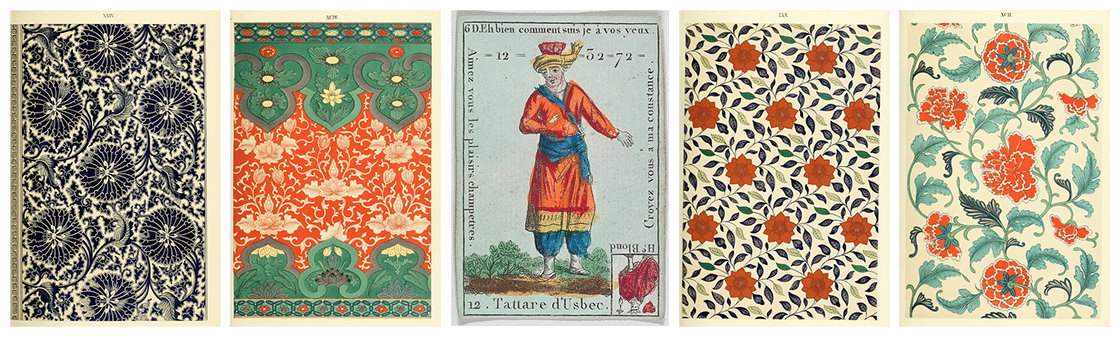
Card backs became a real artistic showcase in the 19th century, and Owen Jones was the name behind most of it. He designed an ornate run of back patterns for De La Rue from 1851 to 1875 that were aesthetically well ahead of what the format had produced before. Goodall and Reynolds followed, each with their own house style, and Goodall in particular built a reputation on elaborate designs from the 1860s onward.
De La Rue doesn’t get to claim the whole story, either. Some historians point to Joseph Reynolds’ work for the 1831 coronation of William IV as the real starting point for decorative backs, two decades ahead of Owen Jones. Whoever actually got there first, the dispute itself is the interesting part: manufacturers were competing directly on back design, not just treating it as an afterthought.
Beyond Aesthetics
The back designs of playing cards weren’t merely about aesthetics; they played a crucial functional role. Consistency and lack of identifiable marks on the backs were essential to ensure fair play. Any deviation or unique marking could give away the identity of the card, which is why uniformity was key.
The Legacy and Influence
That legacy still shapes modern card backs. Styles have moved on, but the core idea, art with a functional job to do, hasn’t. Today’s card backs run the full range: traditional patterns, contemporary design, and thematic sets built around specific cultures and interests.
None of this changes a single decision you’ll make at the table. But the deck in front of you carries German engraving, English tax law, and a discarded Euchre card that outlasted the game it came from, whether anyone at the table notices or not. If it’s put you in the mood to actually learn poker properly rather than just admire the artwork, that’s a fine use of an afternoon.
Whether you’re a fan of high-stakes cash games or the excitement of multi-table poker tournaments, GGPoker is the premier destination for poker enthusiasts. For those aiming to compete for a prestigious WSOP bracelet, push through the ranks for a WSOP Circuit ring, or simply hone their strategies in classic games or poker formats, GGPoker has something for everyone. The platform offers a seamless online poker experience, with innovative features like Smart HUD, PokerCraft, and integrated staking, designed to elevate your game. Whether you’re grinding your way up in daily cash games or competing for life-changing prizes in major online series, GGPoker provides the best environment to play, improve your poker skills, and succeed in the world of online poker. And if you are not sure where to start, you can always play free poker games and learn at the GGPoker School.
About the Author: Maury Orton is a poker writer and editor contributing to GGPoker. He focuses on clear, reliable explanations of the game, drawing on years of experience in online poker media and digital publishing.