Poker as a Teaching Tool: Critical Thinking Skills

Good poker demands the same cognitive work as critical thinking: processing incomplete information, evaluating probabilities, managing risk under pressure, and adjusting when the situation changes. Those demands are exactly why educators have started treating poker seriously. It puts abstract reasoning into practice in a way most classroom exercises don’t.
A Deck of Decisions: Navigating Betting Rounds
At its heart, poker is a game of decisions. Every fold, call, or raise involves careful calculation, weighing risks, and evaluating potential rewards. As the game unfolds, players engage in betting rounds–from the pre-flop to subsequent phases where community cards are revealed–each stage adding layers of strategy as players decide to bet, raise, or fold. This continuous decision-making mirrors the critical thinking skills essential in life’s many challenges. Through poker, students learn to assess situations, gauge probabilities, and make decisions with limited information. This dynamic environment encourages them to weigh options thoughtfully, foresee possible outcomes, and make informed choices–core elements of critical thinking.

The Bluffing Game in Poker: A Study in Psychology and Persuasion
Poker transcends numerical analysis and enters the realm of psychology through the art of bluffing. In the final betting round, especially in Texas Hold’em, players face their last chance to place bets, often using large wagers and well-timed bluffs to sway outcomes. Here, players must read cues, interpret behavior, and influence their opponents–skills that prove invaluable in both personal and professional realms. This aspect of poker teaches students to consider more than just the cards at hand; they learn to account for the human factor, building empathy and the ability to view situations from multiple perspectives. Reading people is a transferable skill. The instincts for spotting deception and adjusting to new information don’t stay at the table.
Risk Management and Emotional Resilience
One of the most tangible lessons poker imparts is the management of risk. Each decision in poker carries a consequence, mirroring the stakes involved in real-life decisions. By engaging in poker-based learning, students confront the realities of risk, learning to assess and manage it effectively. The high-stakes betting strategy of going ‘all in,’ where players bet all their remaining chips, exemplifies this risk management. Furthermore, poker teaches emotional resilience–the ability to remain composed and make rational decisions under pressure. Those habits — staying level when a hand goes wrong, reassessing when conditions change — are exactly what high-pressure decisions outside poker demand.
Probability and Math in Action: Understanding Hand Rankings
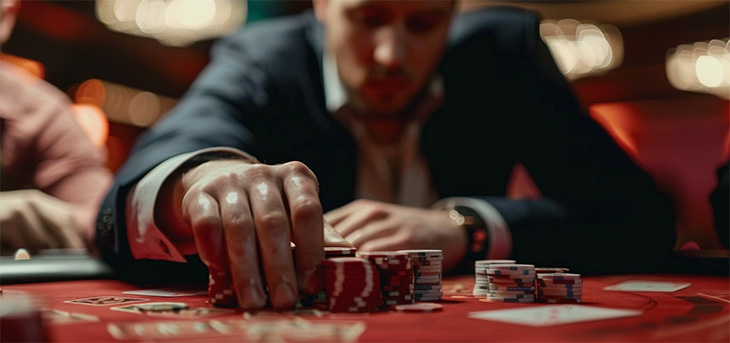
Poker offers a compelling way to bring mathematical concepts to life. Calculating odds, understanding probabilities, and analyzing the statistical likelihood of various outcomes are all integral to poker strategy. Constructing hands from just five cards adds complexity, increasing uncertainty and making strategic betting decisions critical. Understanding hand rankings is essential in determining the likelihood of winning based on five-card combinations. This practical application of math demystifies abstract concepts, making them accessible and engaging. Students learn to apply mathematical reasoning to real situations, enhancing their analytical skills and fostering a deeper appreciation for the subject.
👉 Use Referral Code: WINBIG 👈DEAL ME IN!

Developing Strategic Thinking and Adaptability
The strategic depth of poker, with its emphasis on long-term planning and adaptability, mirrors the strategic considerations of many life decisions. In Texas Hold’em, each player is dealt two cards at the start of the round, which are private. Players must develop a strategy based on the information available, adjust their plans in response to new information, and remain flexible in the face of unpredictability. This aspect of poker cultivates strategic thinking skills, encouraging students to plan, adapt, and think several steps ahead. Most strategic decisions outside the game come down to the same thing: acting on incomplete information while staying flexible enough to change course.

The skills poker develops are useful well beyond the classroom. It’s a hard game to master, which is precisely what makes it work as a teaching tool.
Whether you’re a fan of high-stakes cash games or the excitement of multi-table poker tournaments, GGPoker is the premier destination for poker enthusiasts. For those aiming to compete for a prestigious WSOP bracelet, push through the ranks for a WSOP Circuit ring, or simply hone their strategies in classic games or poker formats, GGPoker has something for everyone. The platform offers a seamless online poker experience, with innovative features like Smart HUD, PokerCraft, and integrated staking, designed to elevate your game. Whether you’re grinding your way up in daily cash games or competing for life-changing prizes in major online series, GGPoker provides the best environment to play, improve your poker skills, and succeed in the world of online poker. And if you are not sure where to start, you can always play free poker games and learn at the GGPoker School.
About the Author: Maury Orton is a poker writer and editor contributing to GGPoker. He focuses on clear, reliable explanations of the game, drawing on years of experience in online poker media and digital publishing.