
By the Book: Chris Ferguson, Howard Lederer, T.J. Cloutier and Dan Harrington
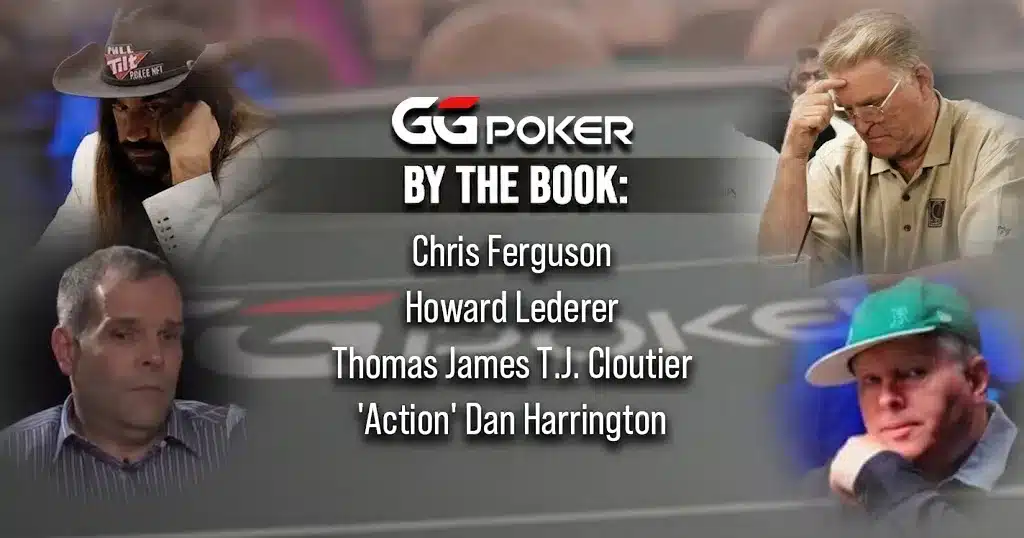
Most of poker’s early wisdom was passed down at the table, hand by hand, and rarely written down. That changed with the players here. This group treated poker as something to be studied, modeled, and explained — a discipline with rules that could be learned rather than a feel you either had or you didn’t. A computer scientist brought game theory to the felt. A lawyer-turned-champion wrote the book that taught a generation how to play tournaments. Between them they hold world titles, Hall of Fame plaques, and a shelf of strategy classics. Two of them are also tied to the game’s biggest scandal. All of them, for better and worse, helped turn poker into a science.
Chris Ferguson
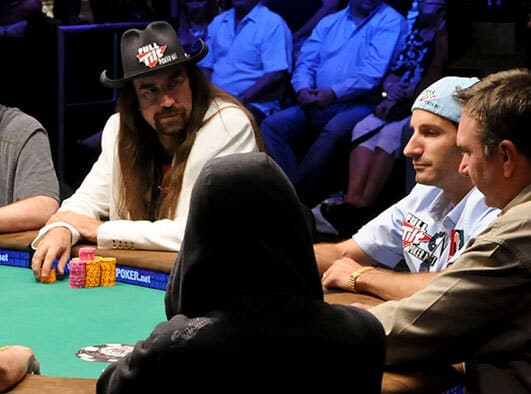
Chris Ferguson looked the part of a mystic — long hair, full beard, wide-brimmed hat, mirrored shades — which is why they called him “Jesus.” The image was a kind of disguise. Underneath it was one of the most analytical minds poker has produced. The son of two mathematicians, Ferguson earned a Ph.D. in computer science and approached the game as a math problem, leaning on game theory, pot odds, and cold discipline where other players trusted instinct.
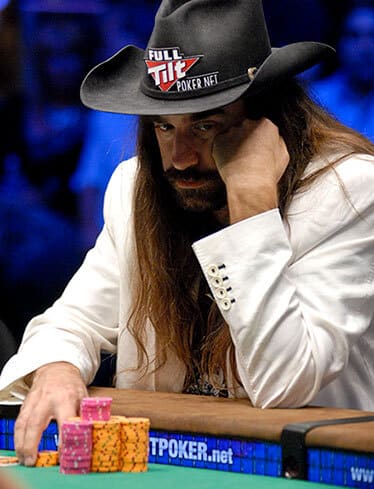
It worked. Ferguson won six WSOP bracelets, most famously the 2000 Main Event, where he beat T.J. Cloutier heads-up when his A-9 caught a nine against Cloutier’s A-Q. He added the 2008 NBC National Heads-Up Championship and became a fixture of televised poker in the boom years, his silent, still table presence as recognizable as the hat.
He carried the analytical bent online, too. Ferguson co-founded Full Tilt Poker in 2004 and became known for a challenge in which he built a bankroll from zero to $10,000 starting with free tournaments, a public lesson in disciplined Texas Hold’em money management.
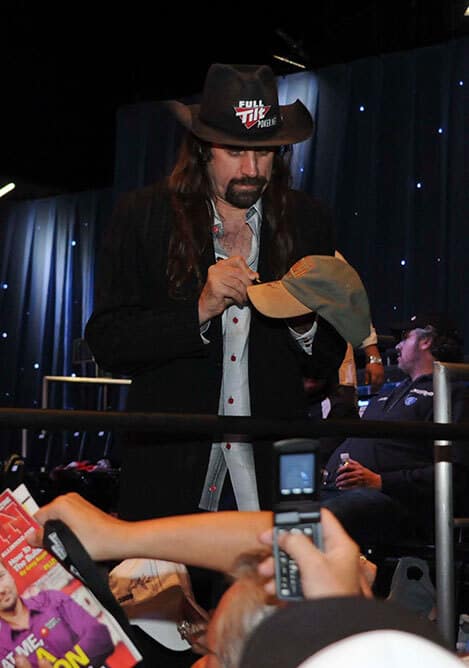
Then it fell apart. On April 15, 2011, a day the poker world calls Black Friday, U.S. authorities shut down Full Tilt and other sites. Players went to withdraw their money and found it was not there. The Department of Justice later described Full Tilt as a “global Ponzi scheme,” alleging its owners had paid themselves hundreds of millions in customer funds. Ferguson eventually settled the civil case by forfeiting $2.35 million and more, without admitting wrongdoing, and returned quietly to the tables in 2016 to a cool reception. The game-theory brilliance is real, and so is the stain. Both are part of his record.
Howard Lederer

Howard Lederer earned the nickname “The Professor” the honest way: he was the player who could explain, in calm and precise terms, exactly why a given play was correct. Born in New Hampshire in 1964, he left Columbia and came up through New York’s Mayfair Club, the same room that produced Erik Seidel and Dan Harrington, before establishing himself as one of the sharpest strategic thinkers of his generation. He is also the older brother of Annie Duke, making the Lederers one of poker’s most accomplished families.
His record holds up: two WSOP bracelets and a win at the inaugural World Poker Tour event at Foxwoods in 2002, a title that helped launch televised tournament poker. For a stretch, “The Professor” was among the most respected voices in the game.
That standing did not survive Full Tilt Poker. Lederer sat on the board of the company at the center of the 2011 Black Friday collapse, and as the figure most associated with its mismanagement of player money, he absorbed much of the community’s anger. To settle with the Department of Justice he paid $1.25 million and forfeited property, and in 2012 he issued a public apology that some accepted and many did not. His strategic contributions to poker were real and lasting. So was the damage, and the two have been inseparable ever since.
T.J. Cloutier
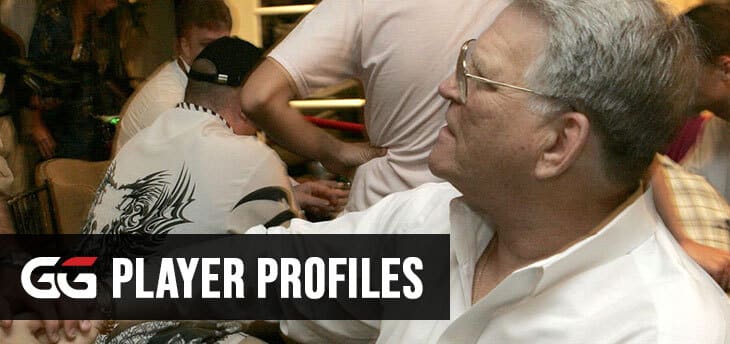
T.J. Cloutier took the long way to poker. Born in California in 1939, he played in the 1959 Rose Bowl, served in the army, and had a professional football career in the Canadian league before a knee injury ended it. He landed on a Texas oil rig, played cards on his days off, noticed he was making more at the table than on the job, and turned pro.
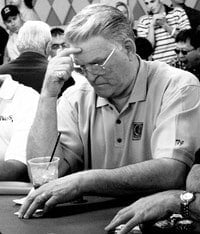
He became one of the great tournament players of his era. Cloutier won six WSOP bracelets, cashed at the series nearly seventy times, and reached an astonishing thirty-nine WSOP final tables. He is the only player to win bracelets in all three Omaha variants the series has spread, and he was Card Player’s Player of the Year twice. The one prize that eluded him was the biggest: he finished runner-up at the Main Event twice, including the 2000 heads-up loss to Chris Ferguson. He entered the Poker Hall of Fame in 2006.
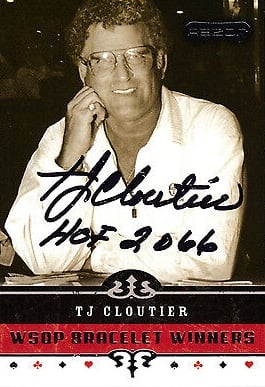
His influence reached beyond his own results. Cloutier put his knowledge on paper, co-writing with Tom McEvoy the manual Championship No-Limit and Pot-Limit Hold’em, for years the definitive text on a form of the game that had almost no serious literature before it. A generation of players learned no-limit from that book. Away from tournaments he was a famously heavy craps player, and by most accounts a losing one, proof that a brilliant poker mind does not always carry over to the dice. But at a poker table, and on the page, few of his contemporaries taught the game more.
Dan Harrington
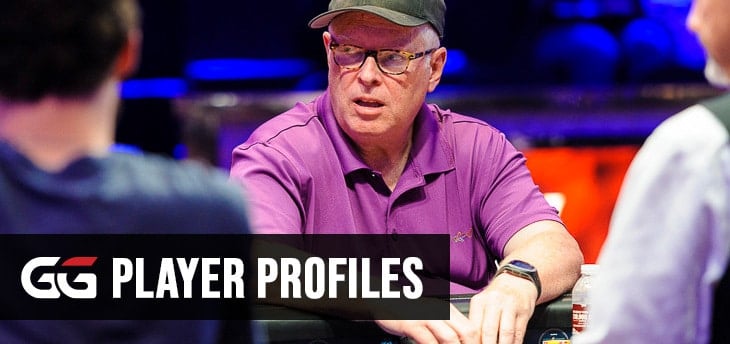
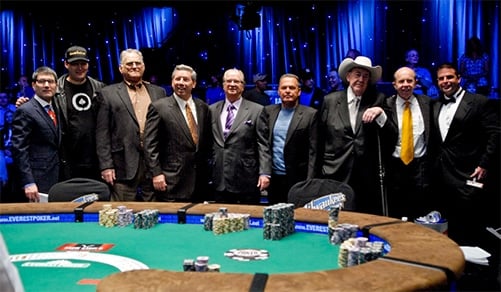
If one man on this list truly wrote the book, it was Dan Harrington. “Action Dan” is a joke name — he is famously tight, patient, and impossible to rattle — and it belongs to a player who came to poker through chess and backgammon. He won the Massachusetts state chess championship in 1971, learned poker at Suffolk University, and sharpened his game at the Mayfair Club alongside Stu Ungar and Erik Seidel. He also spent a decade as a bankruptcy lawyer before poker won out.
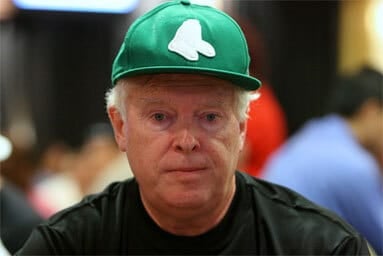
His playing record would be enough on its own. Harrington won the 1995 WSOP Main Event, along with a second bracelet that same summer, and then did something almost unheard of in the Moneymaker era: he finished third in the 2003 Main Event and fourth in 2004, deep runs in fields that had swollen into the thousands. He won a World Poker Tour title in 2007 and entered the Poker Hall of Fame in 2010.

But his lasting influence is on the shelf. With Bill Robertie, Harrington wrote the Harrington on Hold’em series, which became the standard text of the poker boom and gave tournament players a shared vocabulary, most famously “the M,” a simple way to measure how much pressure a shrinking stack is under. For years, if you played tournaments seriously, you had read Harrington. Fittingly, the quiet lawyer who studied the game more carefully than almost anyone turned out to be the one who taught the rest of us how to play it.
The Written Record
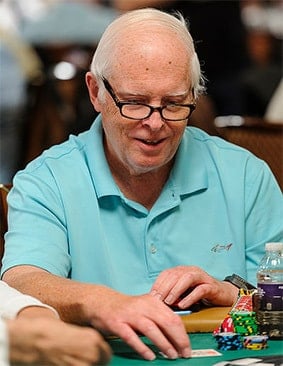
These four turned poker from folklore into a field of study. Ferguson brought the math, Lederer the analysis, Cloutier and Harrington the books that put it all in writing. Two of them left a lasting shadow off the table, and that belongs in the record too. But the game every serious player learns today — built on odds, position, stack sizes, and discipline — is in large part the one these men worked out and wrote down. Poker got smarter because they insisted it could.
👉 Use Referral Code: WINBIG 👈PLAY NOW!
About the Author: Maury Orton is a poker writer and editor contributing to GGPoker. He focuses on clear, reliable explanations of the game, drawing on years of experience in online poker media and digital publishing.