
The Dealmakers: Tony G, Andy Beal, Lyle Berman and Cary Katz
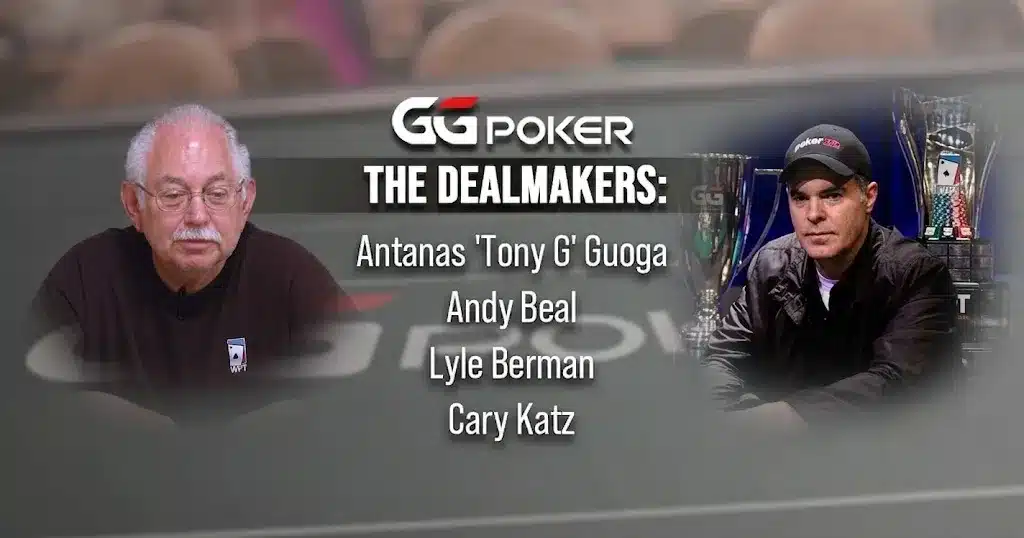
Most poker legends are measured in bracelets and tournament wins. The four men here are measured in something else: companies built, industries changed, fortunes made a long way from the felt. Tony G, Andy Beal, Lyle Berman, and Cary Katz are all serious players, but for each of them poker was the smaller game. One launched the World Poker Tour, one is a billionaire banker who treated the highest-stakes game on earth as a math problem, one turned a poker channel into the sport’s Netflix, and one went from the tables to the European Parliament. These are poker’s dealmakers.
Antanas ‘Tony G’ Guoga
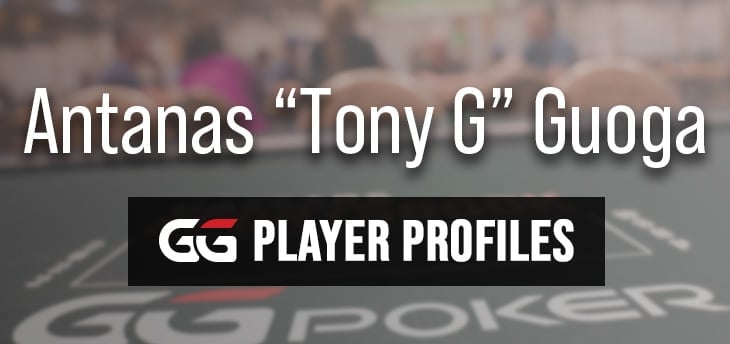
Antanas Guoga plays poker the way he does everything: loudly, and to win. Born in Lithuania in 1973 and raised in Melbourne after his family emigrated when he was eleven, Tony G built his reputation on relentless aggression and a running stream of table talk designed to get inside an opponent’s head. It made him one of the game’s most watchable and most polarizing figures.
The results back up the noise. He has more than $11 million in live tournament earnings, comfortably the most of any Lithuanian in history, with a runner-up finish at the 2004 WPT Grand Prix de Paris, a $1.2 million Short Deck win at the 2021 Super High Roller Bowl Europe, and his best score, close to $1.4 million, at a Triton event in Madrid in 2022. He has never won a WSOP bracelet, which for most players would be the headline. For Tony G it barely makes the summary.

Because the poker was only ever part of the plan. Guoga founded the news site PokerNews, launched the sportsbook TonyBet, backed the cryptocurrency poker room CoinPoker, and moved heavily into blockchain, founding the Blockchain Centre in Vilnius and running a crypto investment company. Then he went into politics, and not at the margins. He served a full five-year term as a Member of the European Parliament, from 2014 to 2019, and was later briefly elected to Lithuania’s national parliament as well.
He was inducted into the Australian Poker Hall of Fame in 2009 and founded the Lithuanian Poker Federation the following year. The table talk was always the smallest thing about him. The story turned out to be much bigger than the table.
Andy Beal
Andy Beal is not a professional poker player, and that is the entire point. He is a Dallas banking billionaire, one of the richest men in America, with a self-taught mathematician’s mind and no fear of a table full of professionals. In the early 2000s he decided to test himself against the best players alive, and he did it the way he does everything: as a problem to be solved.
No single pro had the bankroll to play him at the limits he wanted, so the game’s top players pooled their money into a syndicate known as The Corporation and took him on as a group. Doyle Brunson, Chip Reese, Ted Forrest, Jennifer Harman, and eventually Phil Ivey all took their turns. The stakes were enormous, often $100,000 and $200,000 a bet, enough to make a single session a small fortune won or lost.

Beal was dangerous because he refused to play their game. Rather than try to out-read professionals, he broke poker into probabilities and drilled the recurring situations, leaning on preparation instead of feel. It worked more often than it should have. He once won an $11.7 million pot at the Bellagio, one of the largest in live poker history, and at one stage he was up roughly $13 million on the pros. That is when they sent in Ivey, who over three days in 2006 took $16.6 million off him and effectively ended the challenge.
Beal walked away and mostly stayed away. His real legacy sits outside poker: a banking fortune measured in the billions, and the Beal Conjecture, a genuine unsolved mathematics problem that still carries a million-dollar prize under his name. To Beal, The Corporation was simply another hard system to model. He came closer to cracking it than anyone had a right to.
Lyle Berman
If any of these four bridged the boardroom and the card room completely, it is Lyle Berman. Born in Minneapolis in 1941, he turned his family’s leather business into the Wilsons Leather chain, ran the Rainforest Cafe, and in 1990 co-founded Grand Casinos, helping bring casino gambling to places well beyond Las Vegas and Atlantic City. His casino companies eventually rolled into Golden Entertainment, where he sat on the board for decades.

He was also a genuinely accomplished player. Berman won three WSOP bracelets across the 1989, 1992, and 1994 series, in Limit Omaha, No-Limit Hold’em, and Deuce-to-Seven Draw, a spread that speaks to real range. He reached the Poker Hall of Fame in 2002, banked more than $2.7 million in live tournaments, and bankrolled T.J. Cloutier all the way to a runner-up finish in the 2000 WSOP Main Event.
His largest mark on poker came off the felt. In 2001 he partnered with the television producer Steve Lipscomb to create the World Poker Tour, betting on the hole-card camera, the innovation that let viewers at home see the players’ cards and finally follow the drama of a hand. The tour’s first season aired in 2003, at the exact moment poker was about to break into the mainstream, and it became one of the engines of the boom that followed.
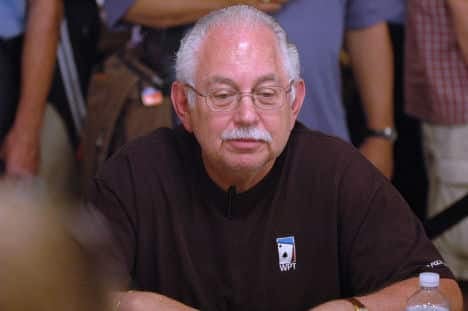
Berman served as WPT chairman for years and never really left the game, later reacquiring the tour he had helped build. For a man who could have been remembered purely as a businessman, he made sure poker owed him too.
Cary Katz
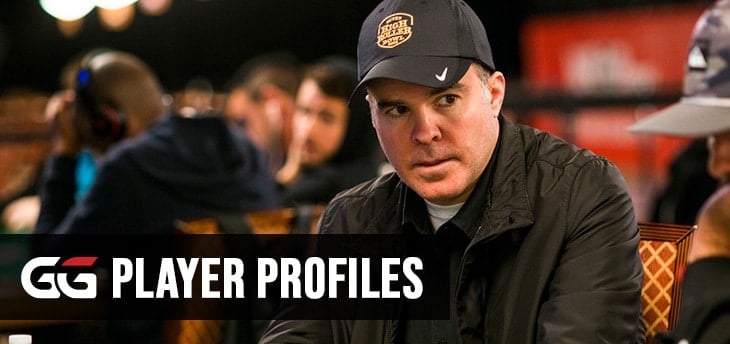
Cary Katz made his money in student loans and spent a good deal of it becoming one of the most active high-stakes players in the world. He founded College Loan Corporation in 1999 and built it into one of the largest private student lenders in the United States, then used the proceeds to bankroll a serious poker habit.
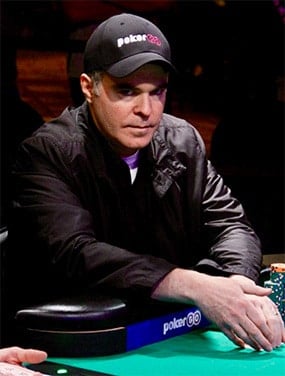
Serious is the right word. Katz has more than $40 million in live tournament earnings, which places him among the top dozen or so players in history, and he built that total the hard way, buying into the biggest events on earth against the best fields money can assemble. His first seven-figure score came at the 2014 Big One for One Drop, a tournament with a million-dollar entry fee, where an eighth-place finish still paid over $1.3 million. For years the one thing missing was a WSOP bracelet, despite more than fifty cashes at the series. He finally won his first in 2025, taking a $2,500 event for $449,245.
His bigger contribution, like the others here, was structural. In 2015 he founded Poker Central, and when its cable version stalled he reinvented it as PokerGO, a subscription streaming service that became, in effect, poker’s Netflix: a single home for live tournaments, classic broadcasts, and original programming. He also created the events that fill it, among them the US Poker Open, the Poker Masters, and the Super High Roller Bowl.
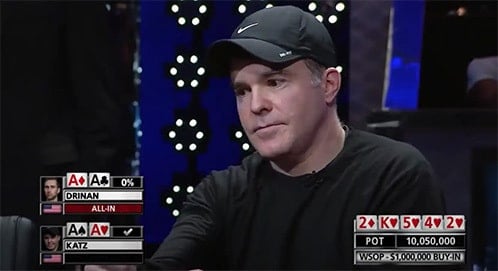
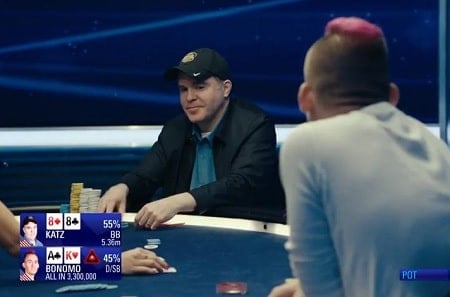
Katz did not just play in poker’s high-roller era. He built the stage it happens on.
The Bigger Game
Four players, four fortunes made mostly away from the table. A politician, a banker, a casino magnate, and a media mogul, each good enough at poker to belong in the conversation, and each too busy building something larger to make it their whole life. That is the thread that ties them together. For most of the game’s legends, poker is the biggest thing they ever did. For these four, it was the warm-up.
👉 Use Referral Code: WINBIG 👈PLAY NOW!
About the Author: Shawn Altbaum has been writing and editing in the online gaming industry since 2007, reporting live from the WSOP Main Event and conducting interviews with professional players. An active poker player, he combines industry expertise with firsthand knowledge of the games he covers. He currently serves as Global Head of Copywriting at NSUS Group, overseeing brand voice and content strategy across GGPoker.