Poker Range: Becoming a More Unpredictable Player
Most players settle into a pattern without realizing it — the same hands played the same way, the same bet sizes in the same spots. It works until the table notices, and then it stops working completely. Becoming unpredictable at the poker table isn’t about playing recklessly; it’s about widening the range of hands and lines your opponents have to account for, so they can never quite pin you down.
Understanding Poker Range
So what is a range? It’s the full set of hands you could be holding in a given spot, as your opponents see it. Understanding the range helps in different betting rounds, as it allows players to make informed decisions before and after dealing community cards. Good players don’t put you on one hand — they put you on a range, then narrow it as the betting tells them more. Balancing your range means keeping it wide and hard to read instead of collapsing into a predictable handful of holdings.
Play the same hand the same way every time and the table will read you cold. In my own local games, the easiest players to beat are the ones whose bet sizing tells the whole story — big with the nuts, small with air. The fix isn’t randomness for its own sake; it’s deliberately varying your lines so a given action could credibly come from several different hands.
Unpredictability Is More Than Bluffing
Unpredictability isn’t just bluffing or shoving all in. It’s playing a range of hands in a range of ways, so the same bet can represent a draw one time and a made hand the next. The goal is to keep opponents guessing about what your actions actually mean.
- Vary how you play similar hands: raise some, call with others, occasionally fold. No single action should map to one holding.
- Change Your Style: tighten up for a stretch, then loosen. How the table reads your style is a lever you control — don’t hand them a fixed read.
- Use Your Table Image: if the table has you pegged as conservative, that’s when a looser line gets paid; if they think you’re wild, tighten up and get called down lighter.
The distinction matters: you want to be the player nobody can put on a hand, not the one spewing chips at random. Unpredictability is controlled, not chaotic — and the only place it really gets tested is in real-money play, against opponents paying attention.
Two Hands That Show the Idea
Two hands make the idea concrete.
For most of the night, you’ve played a relatively tight-aggressive game, selecting strong starting hands and making decisive bets post-flop. This time, you’re dealt a hand like 7♠8♠, a speculative but playable hand. Several players limp in, and you decide to call, disguising the strength of your speculative hand.
The flop comes 6♠9♠2♥, giving you a flush draw and a straight draw–a monster draw but still not a made hand. The first player to act makes a standard bet, and two players call. Instead of just calling with your draw, you put in a substantial raise. This move is unexpected based on your previous tight play, leading your opponents to believe you’ve hit a big hand on the flop, possibly two pairs or a set, and might force folds from made hands or hands drawing to beat you.
Example 2: Slow-playing Aces
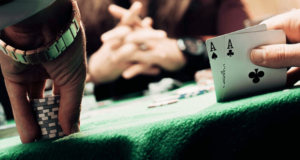
You’ve been the most aggressive player at the table, frequently raising pre-flop and continuing your aggression across later streets. Your opponents have noticed and are wary of getting into big pots against you without strong hands. You find yourself with A♠A♣ in an early position, a prime opportunity for a big pre-flop raise under normal circumstances. However, considering your aggressive image, you choose to just limp in, hoping to disguise the strength of your hand.
Post-flop, the board comes relatively benign, with low, disconnected cards. It checks to you, and you decide to continue the deception by checking again, encouraging someone behind you to take a stab at the pot. As expected, a player in late position, interpreting your check as weakness, makes a sizeable bet. Others fold, and you call. The turn and river are inconsequential, and you maintain your passive facade, leading your opponent to make aggressive bets into you, which you call. At showdown, your aces hold up against your opponent’s top pair, secured by your deceptive play that exploited your aggressive table image.
The point isn’t playing crazy; it’s playing in a way that keeps opponents off balance.
👉 Use Referral Code: WINBIG 👈TAKE YOUR SEAT
The Tools Behind It
A handful of skills make this work in practice.
- Hand Reading: Learn to read your opponents‘ hands. If you can figure out their range, you can play against it.
- Positional Awareness: Use your position at the table to your advantage. Sometimes, where you sit can be as important as what you hold.
- Emotional Control: Keep your reactions flat. If your demeanor never changes, opponents get nothing to read.
- Reps: varying your game well takes time at the tables. The patterns that make you readable only break with deliberate practice.

Controlled, Not Random
Unpredictability isn’t a trick you pull out once; it’s a habit of varying your lines so no single read ever sticks. Build it into how you play every session and opponents stop getting easy decisions against you — which is exactly where you want them.
Whether you’re a fan of high-stakes cash games or the excitement of multi-table poker tournaments, GGPoker is the premier destination for poker enthusiasts. For those aiming to compete for a prestigious WSOP bracelet, push through the ranks for a WSOP Circuit ring, or simply hone their strategies in classic games or poker formats, GGPoker has something for everyone. The platform offers a seamless online poker experience, with innovative features like Smart HUD, PokerCraft, and integrated staking, designed to elevate your game. Whether you’re grinding your way up in daily cash games or competing for life-changing prizes in major online series, GGPoker provides the best environment to play, improve your poker skills, and succeed in the world of online poker. And if you are not sure where to start, you can always play free poker games and learn at the GGPoker School.
About the Author: Maury Orton is a poker writer and editor contributing to GGPoker. He focuses on clear, reliable explanations of the game, drawing on years of experience in online poker media and digital publishing.