
Starting Hands Strategy
Poker isn’t a game of pure chance — the decisions you make matter, and nowhere more than in the first moments of a hand. Before the flop even comes down, the starting hand you choose to play, or fold, already shapes how the rest of it plays out. That’s the whole idea behind starting hand strategy in poker: picking your spots before the board gives you anything more to go on.
Why Starting Hands Matter
It’s tempting to think the real decisions happen later, on the turn and river. But starting hands are the foundation everything else gets built on. Get this part wrong consistently, and no amount of skill on later streets fully makes up for it.
Play the right starting hands and you’re in a strong spot before a single community card lands. Play poor ones, and you’re already fighting from behind, chasing a hand that was a loser before the flop.

Premium Starting Hands
Some starting hands are premium almost anywhere you sit. High pairs like AA, KK, and QQ, and big suited hands like AKs, AQs, and AJs, are hands you’ll usually want to bet or raise rather than just call with. Position still shifts things even with these — opening AA from under the gun invites more resistance than opening it from the button, where fewer players are left to wake up with something better. I’ve never regretted coming in aggressive with any of these — but a strong starting hand still doesn’t play itself. Even AA loses plenty of pots; the cards get you a good starting position, not a guaranteed one.
Hands That Depend on the Situation
Then there are hands whose value depends entirely on the situation: suited connectors (cards of the same suit in sequence) and small pairs. Whether you’re grinding online poker real money games or just getting together to play poker with friends, these are hands you’ll see constantly, and they reward patience more than aggression. Small pairs might turn into a set, which is a strong hand, but they miss the flop entirely more often than not — roughly one time in eight, they hit. That math only works in your favor when there’s enough behind you, and behind your opponent, to make the rare hit worth chasing. How many players are in the pot, and how the betting is going, should decide whether they’re worth playing at all.
Hands to Fold Before the Flop
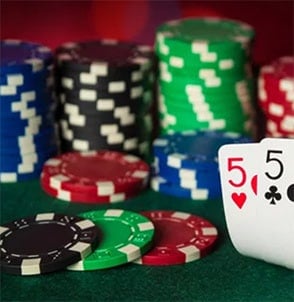
Folding well pre-flop matters just as much as playing your good hands well. Low, unsuited, unconnected hands like 7-2 offsuit or 9-5 offsuit are money-losers over time, even from the Big Blind where it’s tempting to see a cheap flop. Position changes the calculation some — a marginal hand you’d fold instantly from early position might turn into a legitimate steal attempt from the button, when everyone left to act has already shown weakness. But that’s a different decision than just calling because the price looks cheap. Folding them isn’t giving up on the hand; it’s refusing to spend chips on a spot that isn’t worth it. In my experience, the players who struggle most at low stakes aren’t playing their good hands badly — they’re playing far too many bad ones.
Adjusting to the Game in Front of You
No starting hand strategy holds up unchanged across every table. In a tight game, where most players fold too easily, marginal hands gain value because you can steal more pots after the flop. In a loose, aggressive game, the opposite is true — stick closer to your premium hands, since more players seeing the flop means your marginal ones get outdrawn more often. You don’t need a HUD to spot which kind of game you’re in — watching how often players see the flop, and how they react to a raise, tells you within the first orbit or two. Reading which kind of game you’re in, and adjusting accordingly, is what separates a player who’s memorized a chart from one who actually understands why the chart works.
👉 Use Referral Code: WINBIG 👈PLAY NOW!
Starting hand strategy isn’t complicated in theory — play your strong hands, fold the trash, and adjust the middle ground based on the table. What separates good players from the rest is doing that consistently, hand after hand, without letting one bad beat talk you into a hand you’d normally fold.
Whether you’re a fan of high-stakes cash games or the excitement of multi-table poker tournaments, GGPoker is the premier destination for poker enthusiasts. For those aiming to compete for a prestigious WSOP bracelet, push through the ranks for a WSOP Circuit ring, or simply hone their strategies in classic games or poker formats, GGPoker has something for everyone. The platform offers a seamless online poker experience, with innovative features like Smart HUD, PokerCraft, and integrated staking, designed to elevate your game. Whether you’re grinding your way up in daily cash games or competing for life-changing prizes in major online series, GGPoker provides the best environment to play, improve your poker skills, and succeed in the world of online poker. And if you are not sure where to start, you can always play free poker games and learn at the GGPoker School.
About the Author: Maury Orton is a poker writer and editor contributing to GGPoker. He focuses on clear, reliable explanations of the game, drawing on years of experience in online poker media and digital publishing.