
The Big Buy-Ins: Galen Hall, Mikita Badziakouski, Brian Rast and Dan Smith

Most poker is played for money that means something. A weekend player agonizes over a $200 buy-in; a solid regular feels a $2,000 downswing in his stomach. The numbers hurt because they connect to something real — rent, groceries, a life outside the game.
The four players here operate somewhere that connection breaks. They make their living in the biggest buy-in tournaments on earth, events where sitting down costs $100,000, or $250,000, or in a few famous cases a full million dollars, and where a seven-figure swing in a single afternoon is just an ordinary day at work. At those stakes the money stops behaving like money. It becomes a score, an abstraction, a number on a leaderboard, and the players who survive there are the ones wired to treat it exactly that way.
It is not a coincidence that this group includes two Stanford students and two former chess prodigies. Cold, structured thinking is the entry requirement. But the more interesting thing about them is not how they win the money. It is the very different answers each of them has found to a strange question the big buy-ins eventually force: once you can win this much, what is it actually for?
Galen Hall

Galen Hall is the outlier here, and a useful place to start, because he treated poker less as a passion than as a problem well suited to his particular training.
Hall came to the game from Stanford Business School, where he studied exactly the disciplines that turn out to matter most at a poker table: risk management, decision-making under uncertainty, reading incomplete information and acting on it anyway. He simply pointed those tools at a different target.
It worked immediately and spectacularly. In 2011 Hall won the PokerStars Caribbean Adventure Main Event, one of the richest tournaments of its era, for $2.3 million. The victory is still remembered less for the size of the check than for a single hand: heads-up for the title, Hall made a huge laydown because the math and the betting told him he was beaten, avoiding elimination on a hand most players would have gone broke with. It was the kind of fold that separates a gambler from an analyst, and Hall was always the analyst — as much a student of the strategy behind the game as a player of it.

What he did next is the tell. Rather than spend the following decade grinding the high-roller circuit, Hall took the same analytical mind into technology, co-founding a data-focused startup and building products far from the felt. For Hall, poker was never the destination. It was proof of concept, evidence that a certain way of thinking could win at almost anything, cashed once for $2.3 million and then invested elsewhere. He is the first of this group’s four answers to the question of what the money is for, and his answer is the coldest: a means, not an end.
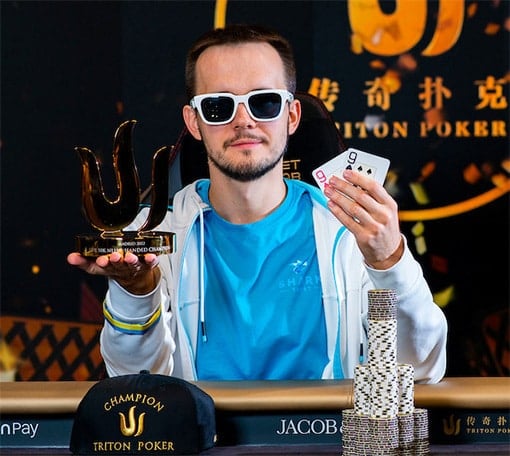
Mikita Badziakouski
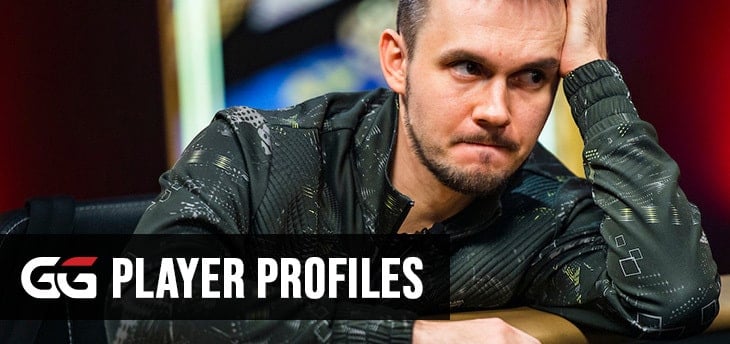
If Galen Hall is the man who cashed one enormous score and moved on, Mikita Badziakouski is his opposite in nearly every way: the player who simply never stopped.
Badziakouski learned chess at five and was betting on sports by twelve, a childhood spent on exactly the kind of cold intellectual competition poker rewards. He turned professional as a teenager, ground his way up through online cash games, and then, across the back half of the 2010s, became one of the most feared tournament players in the world — a fixture in the super high roller fields where the same few dozen elite players face each other for staggering sums, the same rooms the sport’s high-rolling regulars and its solver-trained young guns also haunt.
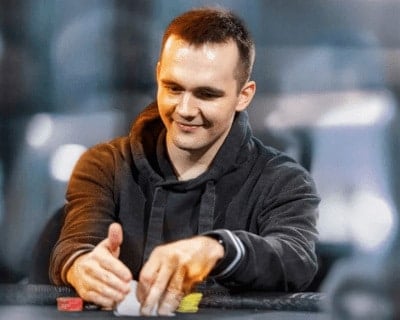
The results are almost hard to comprehend. Badziakouski has now won more than seventy million dollars in live tournaments, a total that puts him among the highest-earning players in the history of the game, and he has cashed for a million dollars or more on more occasions than anyone alive. His biggest single score, a $5.2 million win on the Triton series in Jeju, would be a career for most professionals. For Badziakouski it was one line on a very long page.

He does it quietly, too. There is no persona, no act, no running commentary at the table — just a chess player’s patience applied to the largest games on the planet, week after week, year after year. If Hall’s answer to what the money is for was to take it and go, Badziakouski’s is the opposite. For him the winning is the point, and there is always another tournament.
Brian Rast
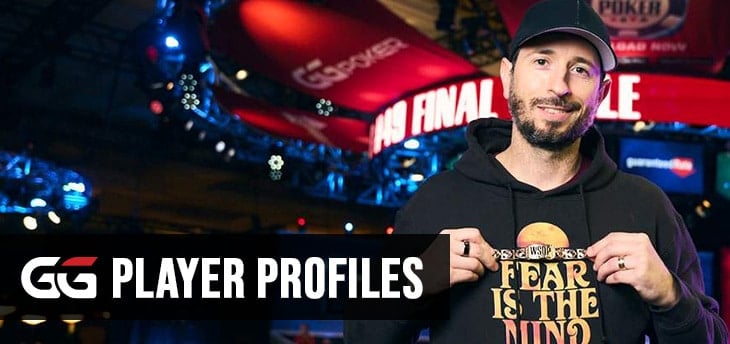
Brian Rast shares a piece of Galen Hall’s biography — he too passed through Stanford, arriving as his high school’s valedictorian — but where Hall studied the game, Rast fell for it. He got hooked in college after watching Rounders, joined the campus poker club, and let his grades slide while a far more interesting education took hold at the tables.
What separates Rast from almost everyone is the kind of poker he chose to master. Plenty of players crush No Limit Hold’em. Rast built his legacy in the mixed games, and specifically in the Poker Players Championship, a $50,000 buy-in gauntlet that rotates through nine different poker variants and is widely considered the toughest event on the calendar. Rast has won it three times. Only one other player, Michael ‘The Grinder‘ Mizrachi, has matched that, and he needed a fourth title to pull ahead.

The rest of the resume matches. Rast owns seven WSOP bracelets, won the 2015 Super High Roller Bowl for over $7.5 million, and once became the only player to earn a million dollars or more from tournaments in seven consecutive years. In recognition of all of it, he was elected to the Poker Hall of Fame.
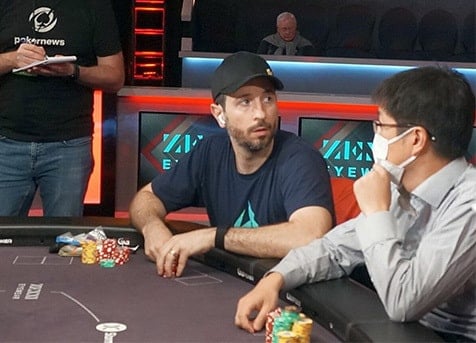
Rast’s answer to the money question is the competitor’s answer. He does not seek out the softest big-buy-in fields; he seeks out the hardest games in the building, the ones that test every discipline poker has, because being the best at those is worth more to him than the prize attached. The money is the scoreboard. The mastery is the game.
Dan Smith
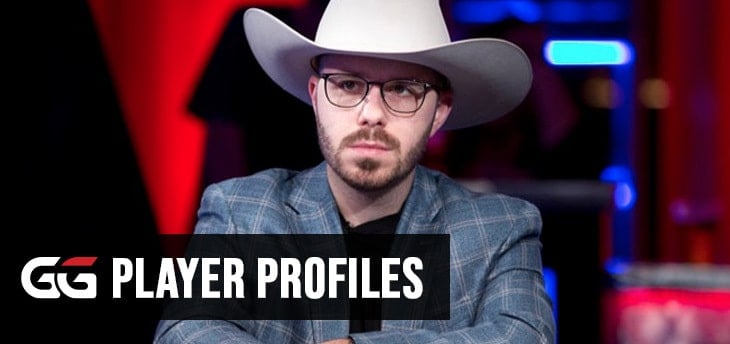
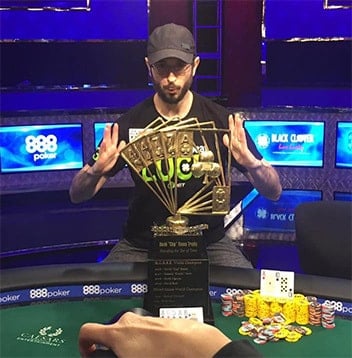
Dan Smith started, like Badziakouski, as a chess player — good enough to earn a college scholarship for it — before a series of hard turns, including the death of his father, pulled him away from the board. He found poker instead, and he found he was very good at it.
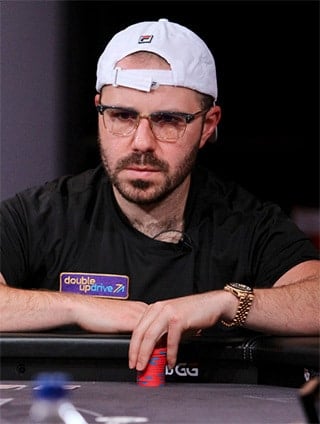
Smith became one of the most consistent high-stakes tournament players of his generation: the world’s top-ranked player at one point in 2014, with eight European Poker Tour titles, a WSOP bracelet, and more than sixty million dollars in career earnings. In a detail almost too neat to be true, the single biggest cash of his life came in a Triton event called the Million for Charity.
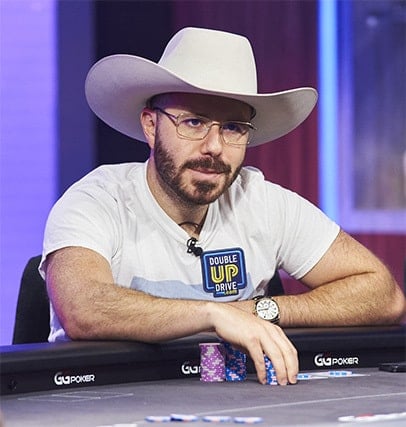
That word, charity, is where Smith’s story turns from impressive to genuinely unusual. In 2014 he founded the Double Up Drive, an annual campaign that identifies a handful of high-impact causes and then matches the public’s donations to them, doubling every dollar given. It has moved millions to organizations fighting poverty and disease, a large share of it Smith’s own money, and he has been open that giving it away is the part of his poker career he cares about most.
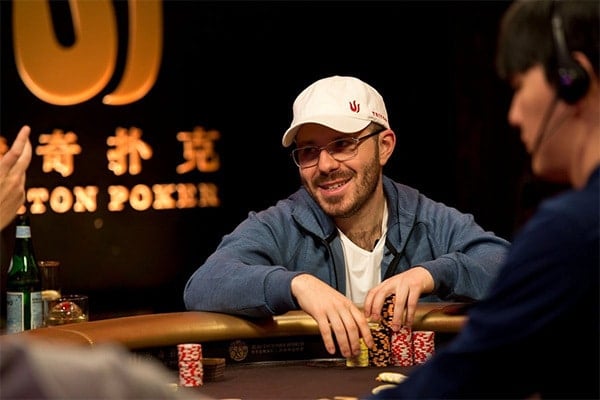
What the Money Is For
That is the thread that ties four very different players together. Hall took the money and built with it. Badziakouski keeps stacking it, quietly, with no sign of stopping. Rast plays for the pure competition of the hardest games in the room. And Smith, who won as much as any of them in the biggest games poker offers, decided the most interesting thing he could do with a fortune made at the felt was to hand it to people who will never sit at one.
Four cerebral minds, four fortunes made in the games where the numbers stop feeling real, and four completely different answers to the only question those numbers ever really posed.
👉 Use Referral Code: WINBIG 👈TAKE YOUR SEAT
About the Author: Maury Orton is a poker writer and editor contributing to GGPoker. He focuses on clear, reliable explanations of the game, drawing on years of experience in online poker media and digital publishing.