
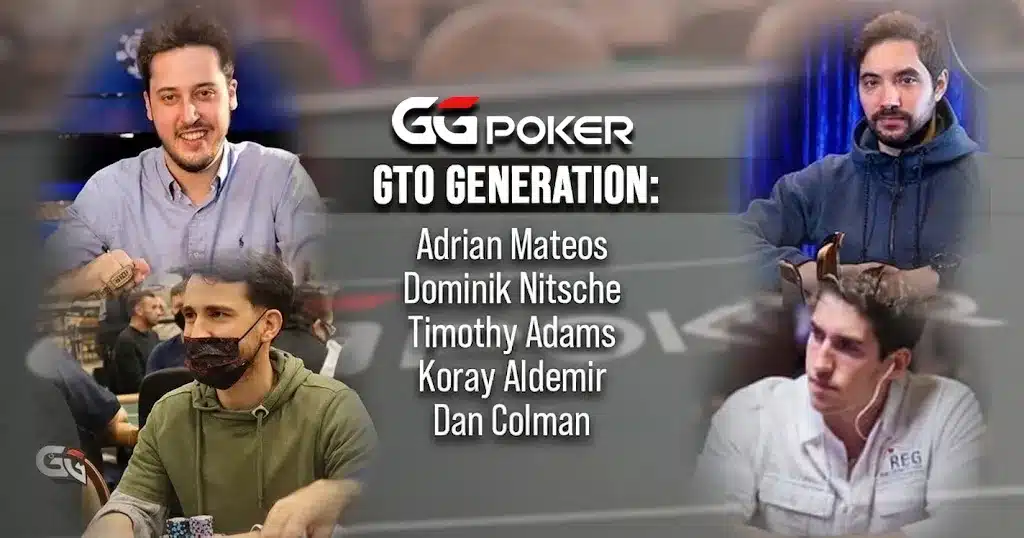
The GTO Generation: Adrian Mateos, Dominik Nitsche, Timothy Adams, Koray Aldemir and Dan Colman
For most of its history, poker sold itself as a game of feel. The great players were said to read souls across the felt, to smell weakness, to trust a gut that ordinary players simply did not have. It made for good television. It also, mostly, stopped being true.
The five players here belong to the generation that took poker apart and rebuilt it as a math problem. They came up on solvers and study groups and training software, grinding poker theory away from the table for hours a day, until the game itself started to look less like a gamble and more like a series of solvable puzzles. One of them literally built the training app the others use. Between them they hold a stack of World Series of Poker bracelets, a Main Event title, and the single largest prize the game has ever paid out.
Dominik Nitsche, one of the five, once put the whole philosophy in a sentence: poker decisions are poker decisions. It does not matter, he said, whether you are playing for five hundred euros or a million. The money is noise. Only the decision is real.
This is what that idea looks like when it wins.
Adrian Mateos
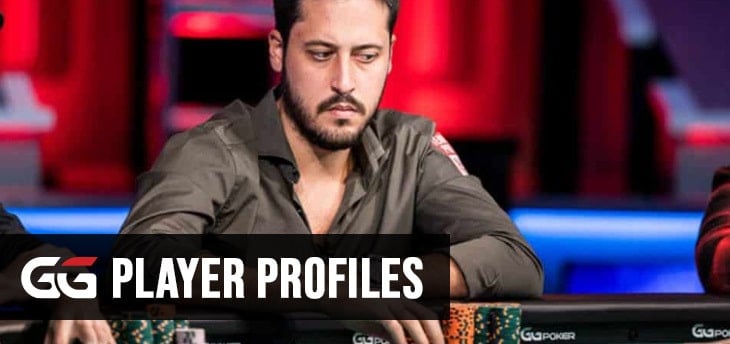
Adrian Mateos is the clearest proof that the new approach works, because he is barely older than the approach itself and he is already one of the most decorated tournament players alive.
Born near Madrid in 1994, he found poker on television at sixteen and treated it, immediately, as a career to be studied rather than a game to be gambled. “I watched all the videos, everything I could find online,” he said of those early years. “That’s all I thought about.” He had decided, before he ever played a serious hand, that poker was the rare field where you were rewarded in proportion to the work you put in. He was right, and he did the work.
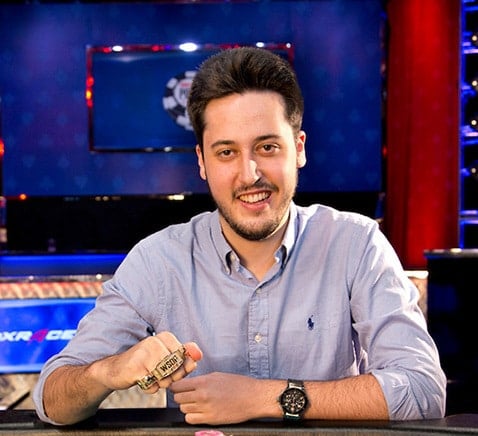
The results read like a misprint. At nineteen, in his very first World Series of Poker, he won the WSOP Europe Main Event for over $1.3 million, beating a final table that included Dominik Nitsche. At twenty-two he became the youngest player ever to win three bracelets. In 2026 he became the youngest to win six. Somewhere in there his career earnings passed sixty-five million dollars.
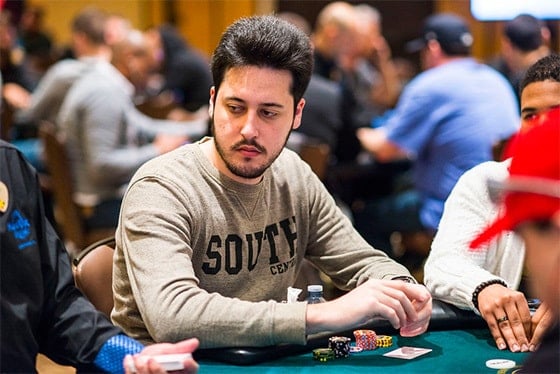
What makes Mateos modern is not the trophies, though. It is the temperament behind them. He treats a satellite and a $250,000 super high roller as the same math wearing different clothes, and he grinds both with the same flat, unbothered focus. He does not look like a man gambling. He looks like a man at work.
That work ethic, pointed at a game his predecessors played on instinct, is the whole story of this generation. Mateos just happens to be its most decorated example.
Dominik Nitsche

If Mateos is the generation’s most decorated player, Dominik Nitsche is its clearest thinker, the one who took the method apart and then sold it back to everyone else.
The German pro has four WSOP bracelets and a World Poker Tour title, and in 2019, on the 50th anniversary of the World Series, he was named one of the fifty best players in the game’s history. He once held the record Mateos would later break, the youngest man ever to win three bracelets, taking it from Phil Ivey. On paper he is simply one of the best tournament players Germany has produced.
His real contribution is off the felt. In 2019 Nitsche launched DTO Poker, a training app that lets any player study game theory optimal poker — GTO, the closest thing the game has to a solved-out blueprint — on a phone. He built the tool that teaches the thing his whole generation is built on.
Ask him how he got so good and he does not talk about instinct or nerve. “I work hard on poker theory every day when I’m at home,” he told a German broadcaster. “I have probably the best poker group in the world around me. We’re all getting a little better every day. There’s new software out there that just keeps getting better at teaching you how to play. We’re getting a hell of a lot better.”
There is no romance in that answer, and that is exactly the point. For Nitsche, and for the players around him, poker is not a mystery to be felt out. It is a subject to be studied, in a group, with better tools every year.

Timothy Adams
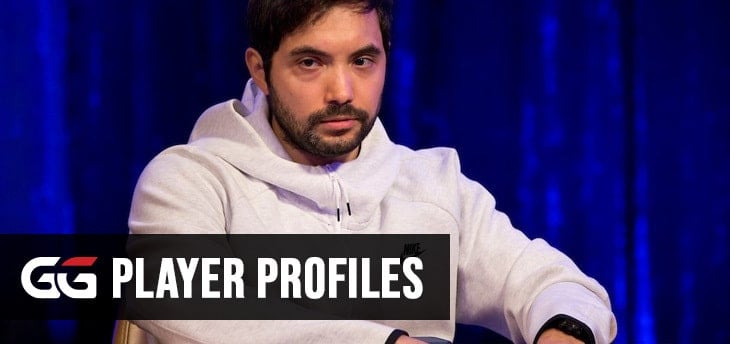
Timothy Adams came to all of this from a different door. Before poker he was an athlete, a serious enough soccer and hockey player that he spent his childhood training for a professional sports career, and when that dream faded at seventeen he brought the same repetitive discipline to a card game he picked up in his first year of university.
It turned out to travel well. Adams has earned close to thirty-nine million dollars, which makes him the second highest-earning Canadian tournament player in history, behind only Daniel Negreanu.
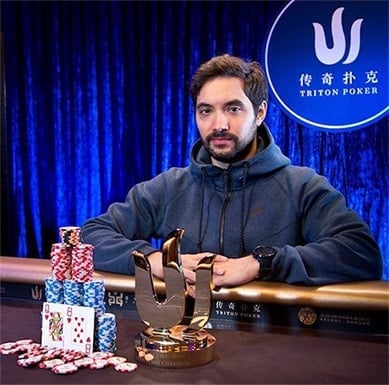
Where he has done his best work is the super high roller circuit, the small, brutal fields where the same few dozen elite players pay six figures to sit down against each other week after week. Adams has won two Triton Main Event titles there. The second, in London in 2023, was worth $4.1 million and came through a final table that included Stephen Chidwick and Dan Cates, which is another way of saying he beat some of the best players in the world to get it.
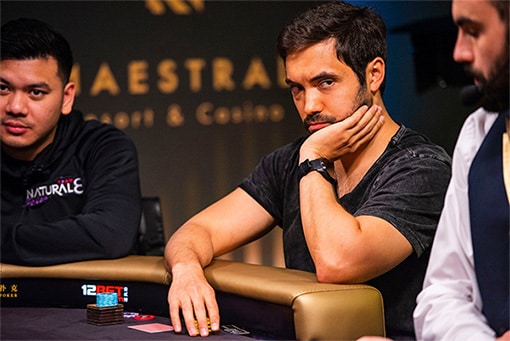
He is not loud about any of it. Adams is a quiet, adaptable technician, the kind of player who shows up at final table after final table without ever seeming to force it, and who has stayed near the top for the better part of two decades in a game that chews through prodigies. Longevity, in this generation, is its own kind of proof. The math does not get tired.
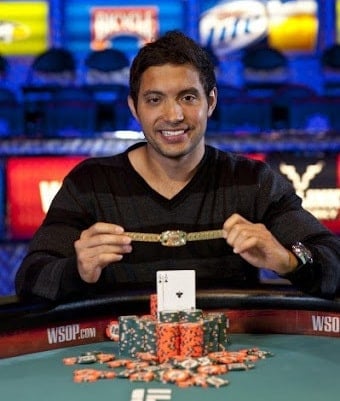
Koray Aldemir
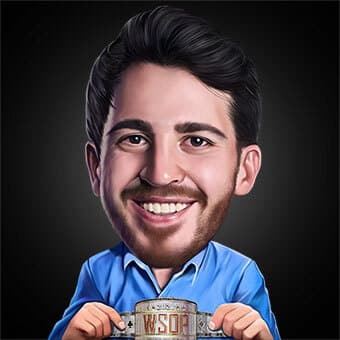
Koray Aldemir is the one who took the cold, studied approach and pointed it at the most sentimental prize in poker.
A Berliner who skipped a grade in school and left a business degree unfinished to play, Aldemir came up in the same solver-and-study-group world as the rest, sharpened in part by his friendship with Fedor Holz, whose own rise pulled him toward the game full time. For years he was a super high roller regular with a reputation as one of the most cerebral players around, and one glaring gap on his resume.
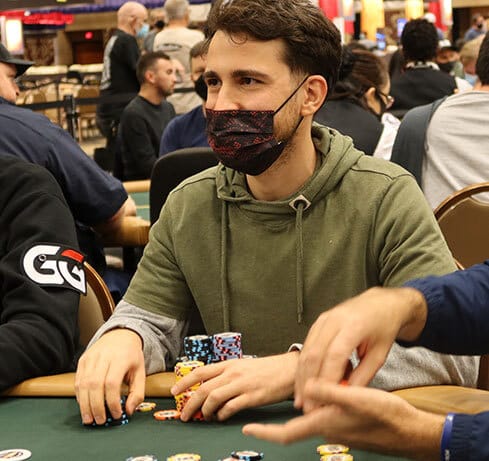
Then, in 2021, he filled it. Aldemir won the World Series of Poker Main Event, outlasting a field of 6,650 players over a final table that ran thirteen hours across two days, and took home eight million dollars and the sport’s most famous bracelet.
The Main Event is supposed to be the great equalizer, the one tournament so big and so long that luck and heart matter as much as skill. Aldemir won it the way this generation wins everything: quietly, precisely, by outlasting almost everyone. He joined a lineage of world champions stretching back fifty years, and he looked, if anything, a little bored doing it.
Dan Colman

And then there is Dan Colman, who won more money in a single tournament than anyone in poker history had at the time, and wanted nothing to do with what came next.
Colman was a natural gambler before he was a technician. He came up betting sports, ran a fifty-thousand-dollar bankroll down to nothing overnight more than once, and had to teach himself the discipline the rest of this group seemed to be born with. When it clicked, it clicked completely. He became the first player to win a million dollars in hyper-turbo tournaments, the fastest and most ruthless format there is, and in 2014 three separate magazines named him Player of the Year.
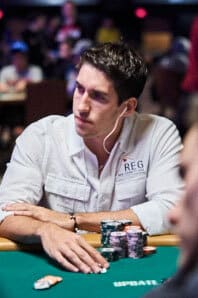
That was the year he won the Big One for One Drop, the $1,000,000 buy-in event, beating Daniel Negreanu heads-up for $15,306,668. At the time it was the second-largest prize ever awarded in a poker tournament.
Then he did something almost unheard of. He refused to talk to the media. No winner’s interview, no victory lap. Colman explained later that he saw a dark side to poker, that he did not think it was something worth glamorizing, and he would not put his name to promoting it. A few years later he stepped away from tournaments more or less for good.
It is a strange and fitting note to end on. Colman took the generation’s core idea — that the decision is the only thing that matters, and everything wrapped around it is noise — and followed it all the way to its logical end. He solved the game, collected the largest check in its history, and then decided that the rest of it — the fame and the cameras and the story — was noise he could live without.
The Game as a Problem
Put the five side by side and a certain kind of poker player comes into focus. Not the gambler chasing a feeling, but the student solving a problem: Mateos studying every video he could find, Nitsche building the app, Adams grinding the same math for twenty years, Aldemir applying it to the one title that was supposed to resist it, Colman following the logic past the money and out the other side.
Their predecessors played poker on instinct and called it an art. This generation treated it as a problem, did the homework, and won everything the old artists did, plus the biggest prize the game had ever offered. It turns out the soul-reading was optional. The math was not.
👉 Use Referral Code: WINBIG 👈TAKE YOUR SEAT
About the Author: Maury Orton is a poker writer and editor contributing to GGPoker. He focuses on clear, reliable explanations of the game, drawing on years of experience in online poker media and digital publishing.