

The Game of Gold Table: Michael Soyza, Josh Arieh, David Williams and Lukas Robinson

In 2023, GGPoker tried something the game of poker had never quite seen. “Game of Gold” was a poker-meets-reality-TV series, filmed in Seoul and hosted by Ali Nejad, that moved sixteen pros into a shared house, split them into teams by card suit, and set them grinding Sit and Go matches for gold coins. Those coins converted into chips for a winner-take-all finale worth $456,000.
The point of the show was the casting, and it threw its net wide. The four tournament players here are the proof of how wide: a Malaysian Triton crusher, two men who once sat at the same World Series final table, and a streamer who built his name on Twitch. Four very different roads to the same felt.
Michael Soyza
Michael Soyza is the modern high-stakes tournament player in close to pure form. He is Malaysian, he plays the biggest buy-ins in the world, and he got there from about as far away as a person can start: a three-cent home game in 2008, picked up after a stint in investment banking convinced him the felt was more interesting than the desk.

What followed was a steady climb into the Triton Super High Roller circuit, where he has collected multiple titles. The signature one came in Jeju in 2019, when he beat Sam Greenwood heads-up in a field studded with names like Bryn Kenney and Jason Koon, and did it playing through a hand he had broken snowboarding. In 2023 he went bigger still, finishing runner-up in the $100,000 Triton Main Event in Vietnam for $2.2 million and then winning a $75,000 event in Cyprus for another $1.7 million.
He is not only a No Limit Hold’em player, either. Soyza has won in Omaha, Short Deck, and Turbo Hold’em, the kind of range that separates a specialist from a genuine all-around threat, and away from the table he is one of the owners of the Asian Poker Tour. By the time he joined Game of Gold his winnings had passed $14 million; they have since climbed beyond $20 million.
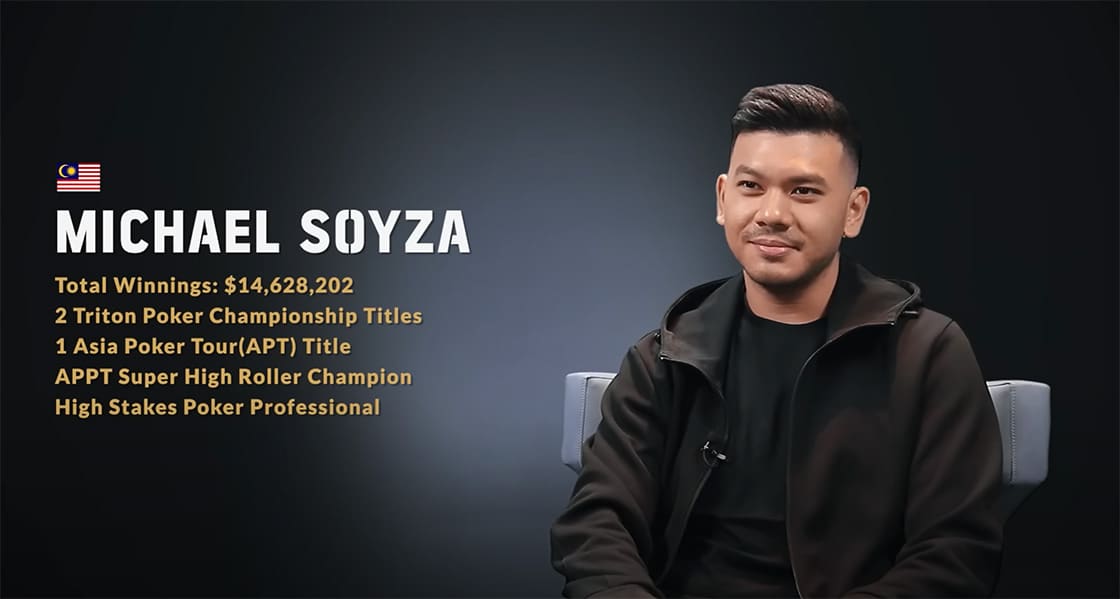
On the show he landed on Team Clubs, alongside Jason Koon, Daniel Negreanu, and Kevin Martin, and handled the format shift better than most. Plenty of strong tournament players look lost the moment a game stops resembling a normal final table. Soyza didn’t.
Josh Arieh

Josh Arieh has never been the quiet type, and he has never pretended otherwise. Loud, needling, happy to get under an opponent’s skin and then back it up with chips, he came into the game in 1999, right before the boom, when poker still rewarded nerve and street smarts as much as textbook study. He won his first bracelet that same year, a $3,000 Limit Hold’em event, and he was only getting started.

His defining moment came in 2004, at the World Series of Poker Main Event that turned the game into television. Arieh finished third, for $2.5 million, playing the whole way in the brash, combative style that split the room into fans and detractors and made him one of the boom era’s most memorable characters. He was far from finished. In 2021 he ran up a summer good enough to be named WSOP Player of the Year ahead of Phil Hellmuth, and he held six bracelets by the time Game of Gold came around, a total he has since pushed to seven. His live winnings are past $14 million, built the hard way, across decades rather than one hot run.
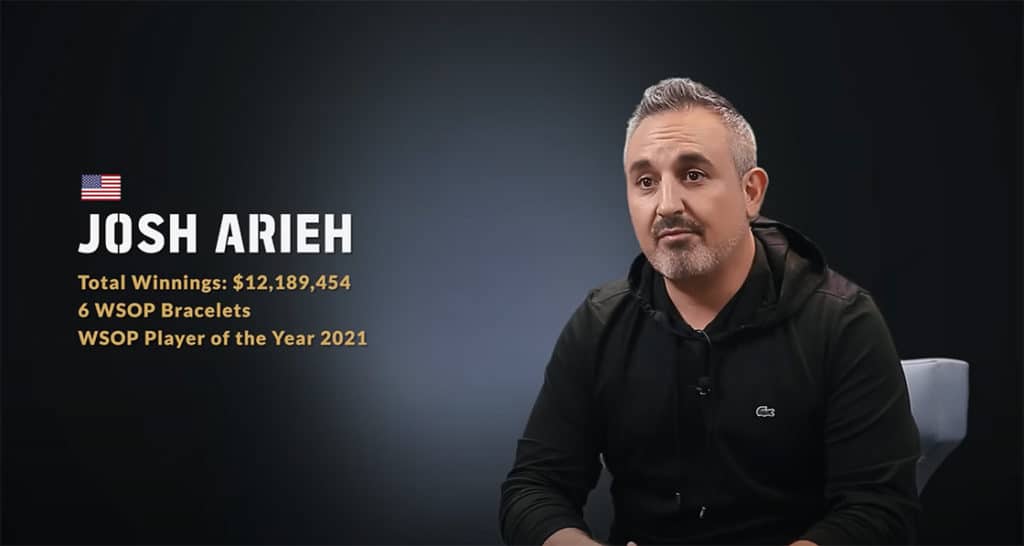
Game of Gold produced the most surprising note of all. Arieh landed on a strong team, at points alongside Maria Ho and Fedor Holz, and when it wrapped he talked less about his own results than about the friendships and the teamwork the format forced on him. From a player who built a career on going it alone and getting in faces, that was genuinely revealing.
David Williams

Arieh was not the only man on Game of Gold who sat at that 2004 Main Event final table. David Williams was there too, and he finished one spot better, runner-up to Greg Raymer for $3.5 million, as a near-unknown. A result like that from a newcomer usually reads as a fluke. Williams spent the next twenty years proving it wasn’t.
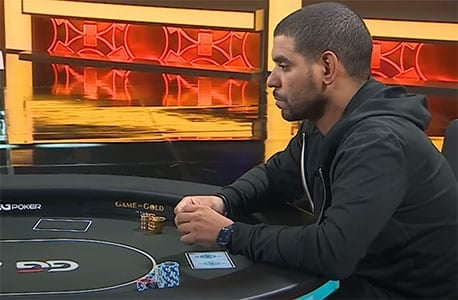
Part of the reason he was ready is that poker wasn’t his first serious card game. Williams came up as a competitor in Magic: The Gathering, a game built on deep strategic decision-making, and he brought those analytical habits straight to the felt. He backed up the Main Event run with a 2006 WSOP bracelet in Seven-Card Stud, a game far enough from No Limit Hold’em that winning both says something real about his range, and he went on to complete a Triple Crown across the WSOP, WPT, and WCOOP. His career winnings sit past $9.2 million. He even turned up on MasterChef, which rewards a lot of the same instincts, reading a room and adapting under pressure, that keep him dangerous at a table.
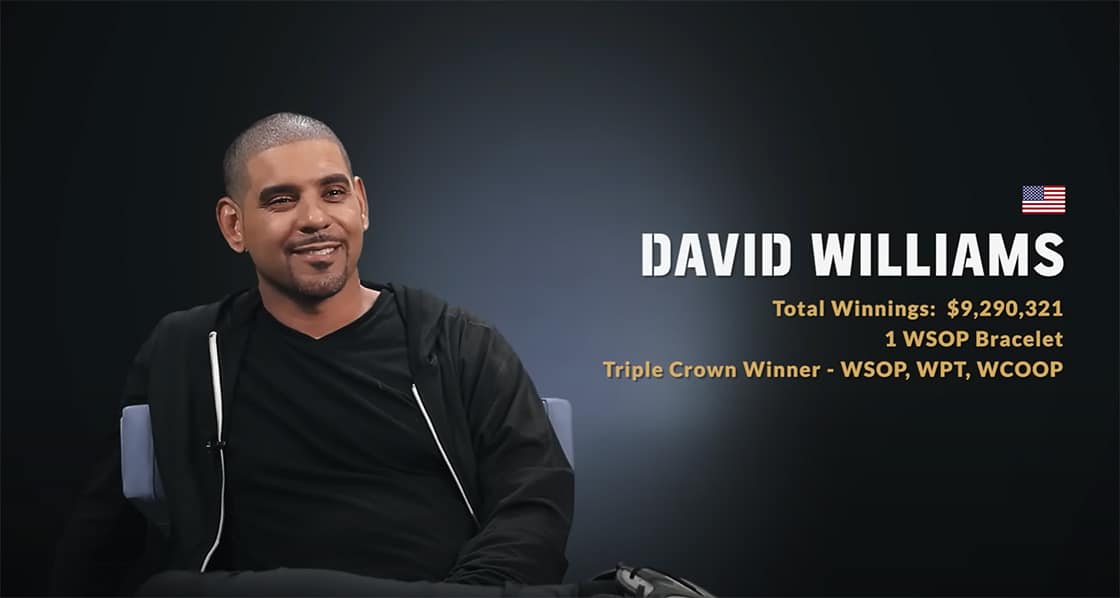
On Game of Gold, where each player started with twenty gold coins and had to build a stack while cooperating with teammates who would soon become opponents, Williams threaded that needle as comfortably as anyone in the cast.
Lukas Robinson

If Arieh and Williams represent where tournament poker has been, Lukas Robinson is a signpost to where it is going. The Englishman, known online as “RobinPoker,” did not grind his way up through decades of live circuits. He quit a job at a fish and chip shop to chase the game, and he made his name on a webcam.

In 2021 he set himself a genuinely punishing target, streaming 1,000 hours of poker on Twitch in 100 days, the kind of endurance run that turns a player into a personality and a personality into a brand. The live results have followed: deep runs at the UK Poker Championship and the Dublin Poker Festival in 2023, and a win in the Sunday Party at PartyPoker. He is not the biggest earner in this group, and that is rather the point. He represents a path into the game that simply did not exist for the other three.
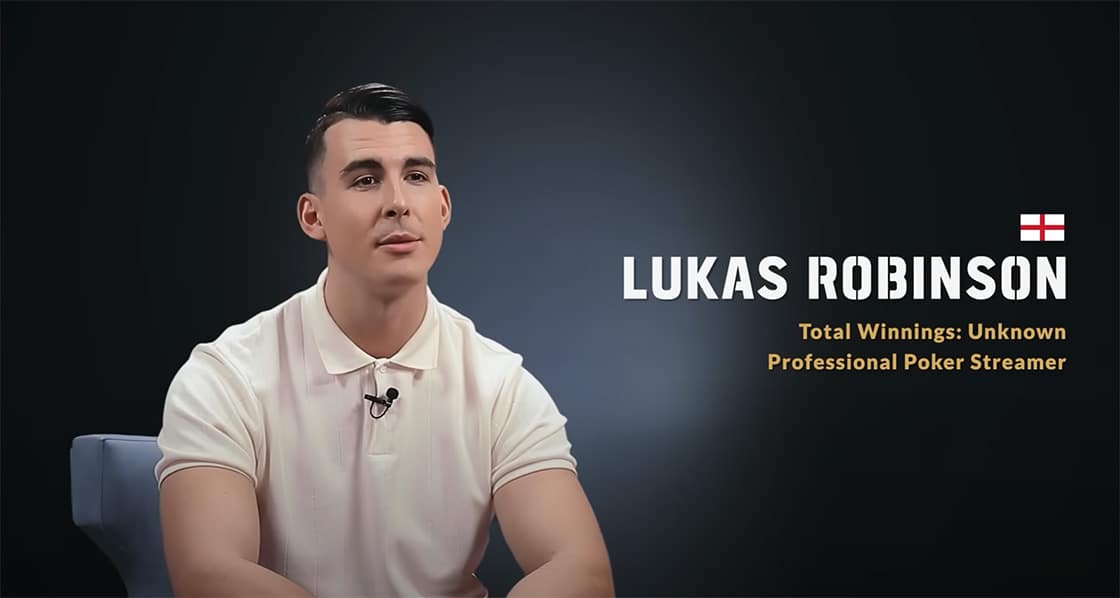
On Game of Gold he suited up for Team Hearts, next to David Williams and Andy Stacks, grabbed an early lead in one episode, and then ran into an elimination hand against Johan Guilbert. The exit stung, but sharing a table with players of that pedigree was the sort of stage his whole career has been building toward.
Four Roads to One Table
The trick of Game of Gold was never really the gold coins or the cameras. It was the casting. Put a Triton high-roller, a boom-era antagonist, a Magic prodigy who nearly won a world title his first time out, and a Twitch streamer at the same felt, and you get a snapshot of nearly every direction a tournament career can come from at once.
Two of them, Arieh and Williams, had already shared a table twenty years earlier, and took very different roads back to another one. That is the quiet truth the show kept bumping into. In poker, the table is the one thing everyone has in common, no matter how they got to it.
👉 Use Referral Code: WINBIG 👈PLAY NOW!
About the Author: Maury Orton is a poker writer and editor contributing to GGPoker. He focuses on clear, reliable explanations of the game, drawing on years of experience in online poker media and digital publishing.