
The Online Generation: Chris Moorman, Jason Mercier, Shaun Deeb, John Juanda and Allen Cunningham

There is no crowd for this. No felt, no dealer, no clatter of chips. Just a bedroom somewhere, a laptop glowing at three in the morning, and a dozen tournament tables stacked across a single screen. The player behind them has no name here, only a handle. Moorman1. treysfull21. Luckbox.
This is where the modern poker champion was forged.
For a certain generation, the game of poker was learned in silence and volume: thousands of tournaments played at once, against opponents who were also just screennames, for money that arrived as a number in an account. The bracelets and the cameras and the seven-figure live scores all came later. The five players here are among the most decorated tournament winners alive, with twenty-six World Series of Poker bracelets between them. Four of the five got their real education somewhere nobody was watching.
They are the online generation, and this is what they did with it.
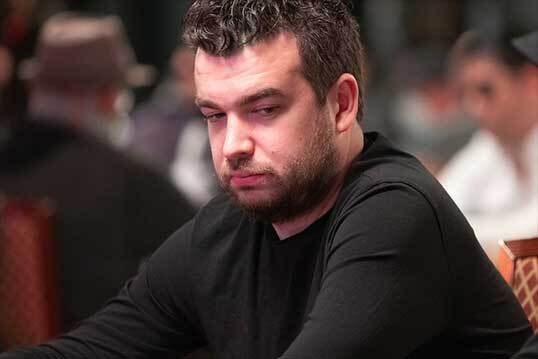
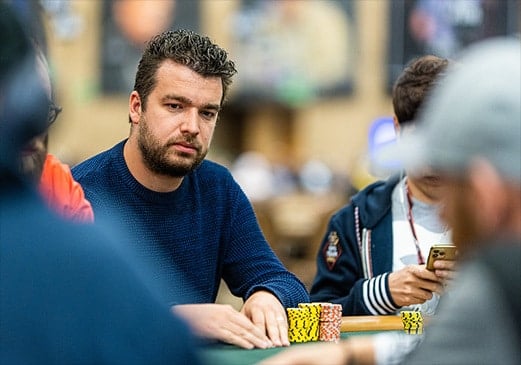
Chris Moorman: The Name Behind the Handle

Before Chris Moorman was Chris Moorman, he was Moorman1, and Moorman1 was terrifying.
Across the back half of the 2000s and into the 2010s, nobody won more online. Moorman became the first player to cross fifteen million dollars in online tournament earnings, a figure that now sits north of twenty-five million. He holds the record for PocketFives Triple Crowns, thirty of them, nine clear of anyone else. He was ranked the number one online player in the world more times than he could probably count.
And for a long time, that was held against him.
There is an old snobbery in poker that online results are somehow softer than live ones, that a screenname is not a scalp. Moorman spent years labeled the best player without a major live title, the online king who could not quite translate. It stung, because it was not true, and in 2011 he set about proving it.
That was the year the roof caved in on American online poker. Black Friday, when the United States government seized the largest sites and cut millions of players off from the game overnight. Moorman, like everyone who lived on those virtual tables, was pushed toward the live felt. He did not go quietly.
He finished runner-up at the World Series of Poker Europe Main Event for over a million dollars. He took down the World Poker Tour LA Poker Classic for another. And in 2017 he finally got the thing they said he never would: a WSOP bracelet, in a $3,000 six-handed event.
His second bracelet, four years later, arrived in a way that felt almost like a private joke. He won it online.
The handle and the name, it turned out, were the same player all along.
Jason Mercier and the Art of Walking Away
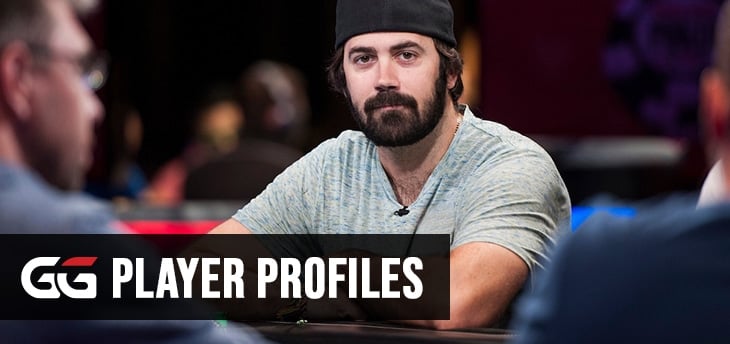
Jason Mercier grew up in Fort Lauderdale playing every sport he could find, and he brought an athlete’s appetite for repetition to poker. Fifty hours a week online under the name treysfull21. One of only sixteen players to reach PokerStars Supernova Elite, the most punishing loyalty tier the site ever offered. He did not dabble. He drilled.
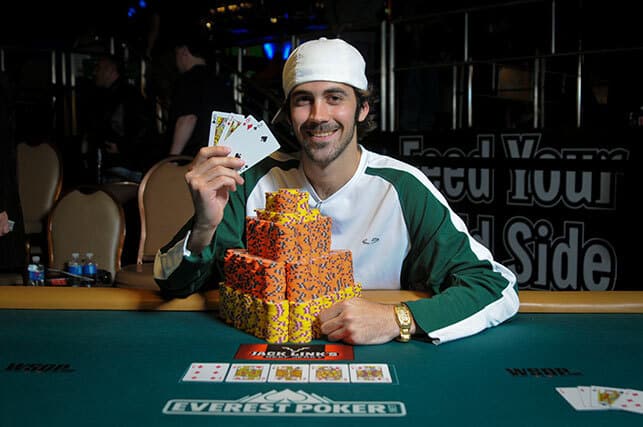
Then, in 2008, he showed up to his first serious live tournament and won it.
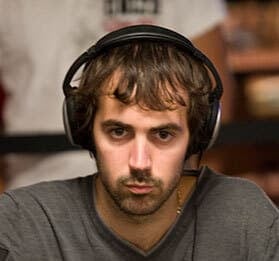
It was the European Poker Tour Main Event, and Mercier, a qualifier who had come in through a satellite, beat the entire field for over a million dollars. It was the kind of debut that usually only happens in the movies. For Mercier it was a mission statement.
What followed was one of the most dominant stretches the tournament world has seen. Five WSOP bracelets. A European Poker Tour title. More weeks ranked number one in the world, on the Global Poker Index, than anyone before him. In 2016 he ran up a summer so absurd, two bracelets and a Player of the Year award among the wreckage, that he found time in the middle of it to propose to his wife Natasha at the final table of an event they were both playing.
And then, more or less, he stopped.
In 2018, at the height of his powers, Mercier stepped back from tournament poker to be with his family. In a game built on the inability to walk away from the next hand, the grinder who had drilled fifty hours a week simply decided he had somewhere better to be. It might be the most disciplined thing he ever did.
Shaun Deeb: Too Many Seconds

Shaun Deeb did not multi-table. He swarmed.
At his peak he would run twenty tournaments at once, a blur of decisions across a wall of screens, and it is estimated he played something like thirty-five thousand online tournaments in his first three years. He was the first player to top the PokerStars tournament leaderboard in back-to-back years. He held eight World Championship of Online Poker titles, one shy of the all-time record. The volume would have broken most people. It nearly broke him: he burned out and announced his retirement in 2009, at twenty-three.
He came back, of course. And when Black Friday shoved him toward live poker the way it did the others, Deeb turned out to be just as dangerous away from the screens.
His 2018 alone is a career for most players: sixteen cashes at the World Series, two bracelets, a Player of the Year title, a pair of scores worth more than two million dollars combined. But the number that came to define him took longer, and hurt more, to assemble.
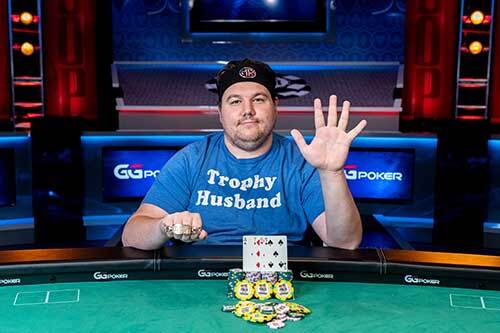
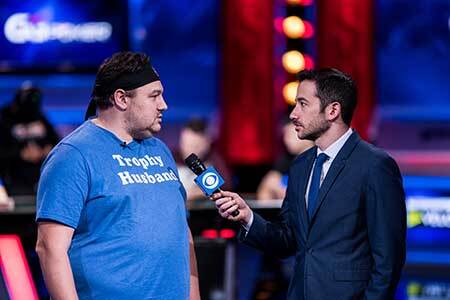
For years Deeb was poker’s hard-luck bridesmaid, piling up second-place finishes at the WSOP, close enough to taste it, over and over. Too many seconds, he called them.
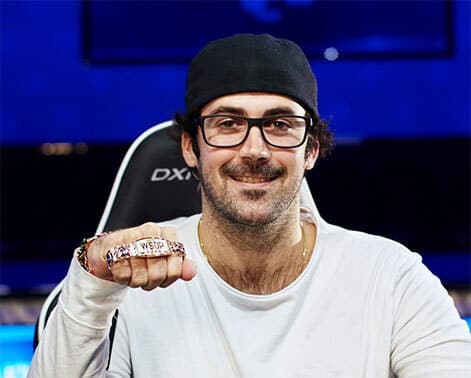
Then he stopped finishing second. In the summer of 2026 he won his ninth WSOP bracelet, joining a shortlist of legends, Erik Seidel and Johnny Moss among them, with only Phil Hellmuth, Phil Ivey, Doyle Brunson and Johnny Chan ahead of him. The loudest online kid in the room had quietly built one of the great bracelet collections in the history of the game.
John Juanda: The Quiet Architect

John Juanda arrived in the United States to study, was taught poker by a stranger on the flight over, and sold bibles door to door in Seattle to fund a Master’s degree he would never really need.
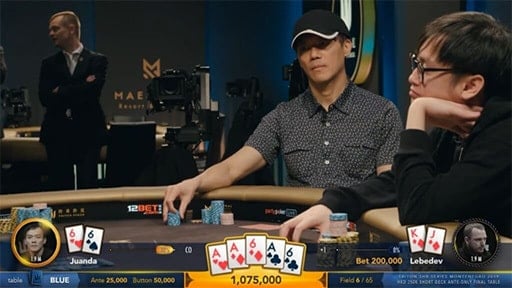
They call him Luckbox, which is a poker insult, the name you give someone who wins on nothing but fortune. It could not be less accurate. Juanda is one of the most respected tournament minds the game has produced, a five-time bracelet winner and a member of the Poker Hall of Fame, and the nickname is really a running joke among people who know exactly how much skill they are looking at.
Ask Daniel Negreanu, who has spent years trying to get the rest of the world to pay attention.
“Perhaps the most underrated and neglected superstar in our game today is John Juanda,” Negreanu once wrote. “If you had to pick one guy to make a final table, your best bet would be John Juanda, hands down.”
There is a story Juanda tells that captures him completely. He bought into his very first poker game with a single hundred-dollar bill, and to this day, he says, it is the only money he has ever put into poker out of his own pocket that did not come from poker itself. Every chip since has been won. It is a level of bankroll management that borders on the supernatural.
Juanda also helped build the arena the rest of this generation grew up in. In 2004 he co-founded Full Tilt Poker with a group of pros including Phil Ivey, and for years it was one of the two biggest sites in the world. When Black Friday came, it did not just move Juanda’s game. It took down his company. He answered the way he answers everything, quietly, by going back to work and winning: a Triton Super High Roller in Macau for nearly three million dollars, among the biggest scores of a career that has never really slowed down.
Allen Cunningham: The Standard

Allen Cunningham is the one who was already there.
Before the online boom sent a generation of screennames toward the live felt, Cunningham was learning the game the old way: at a kitchen table in Riverside, then at the low-stakes tables of California’s tribal casinos, then in the company of a young Phil Ivey, a young Daniel Negreanu, a young John Juanda, all of them sharpening each other before any of them were famous. He turned pro at nineteen and never looked like anything but a professional.
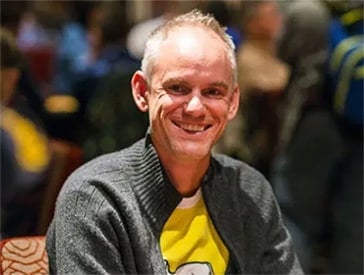
What he became is the quiet standard the rest of them were measured against. Five WSOP bracelets. A Player of the Year award. A reputation, among the very best players in the world, as the finest all-around player of his era. He did it without a persona, without a catchphrase, without ever seeming to raise his voice. He simply cashed, and cashed, and cashed.
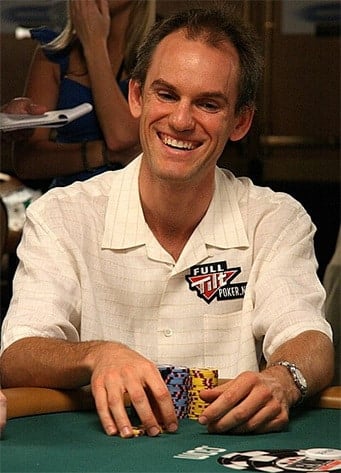
Nowhere is that more visible than at the game’s biggest table. Cunningham has cashed in the World Series of Poker Main Event ten times, a record he shares with only two other men in history: Berry Johnston and Johnny Chan. In 2006, in the largest Main Event ever assembled, he outlasted all but three of nearly nine thousand players.
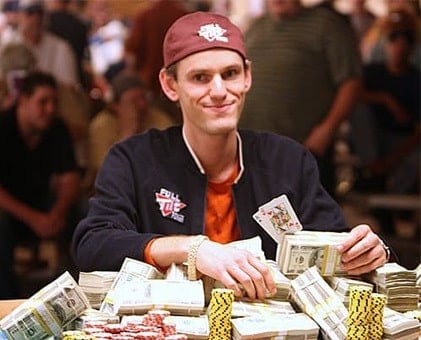
That is the company Cunningham keeps. Not the online number ones or the leaderboard kings, but the enduring live legends, the names carved into the oldest part of the record book.
Which is the whole point of a group like this one. The online generation did not arrive to overthrow the masters. It arrived to join them.
Where the Bracelets Get Counted
Twenty-six bracelets sit between these five players, won under the hard lights of the Rio in front of cameras and crowds. But four of them were made somewhere else first. In the glow of a laptop, at an hour when the rest of the house was asleep, playing a dozen tables at once for the love of a game that had not yet learned their real names.
The online tables were never the minor leagues. They were the proving ground. The World Series is just where this generation went to collect.
👉 Use Referral Code: WINBIG 👈TAKE YOUR SEAT
About the Author: Shawn Altbaum has been writing and editing in the online gaming industry since 2007, reporting live from the WSOP Main Event and conducting interviews with professional players. An active poker player, he combines industry expertise with firsthand knowledge of the games he covers. He currently serves as Global Head of Copywriting at NSUS Group, overseeing brand voice and content strategy across GGPoker.