
The Cutoff
At a nine-handed poker table, the cutoff — one seat to the left of the dealer button — is the second-best position. It offers late pre-flop action, a wide opening range, and real leverage over the player in the best seat.
What is the Cutoff in Poker?
In the landscape of a poker table, particularly at a nine-handed table, each position holds its unique characteristics and strategic implications.
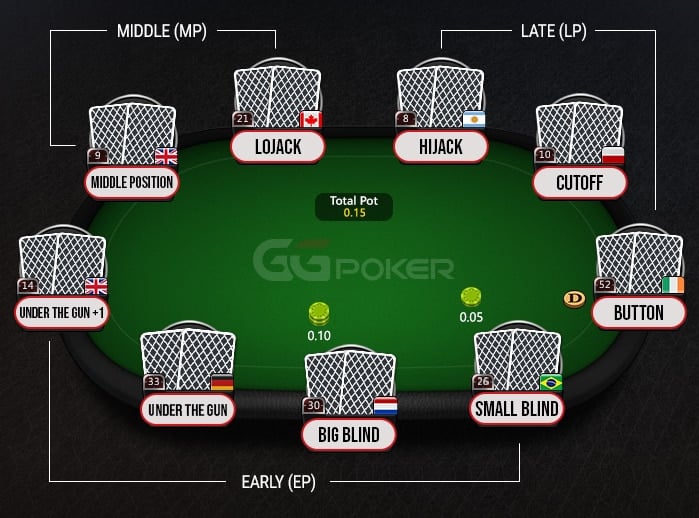
The cutoff is the seat right to the left of the dealer button. This placement is strategic, as the dealer button is the most coveted position due to its advantageous post-flop acting sequence. The rotation of the dealer button moves clockwise, ensuring that each player experiences every position, including the cutoff, once every orbit.
Origins of the Name ‘Cutoff’
The origins of the term ‘cutoff’ might not be crystal clear, with various theories floating around. One practical explanation suggests that in home games, the player in this position often had the responsibility of cutting the deck after the shuffle — hence the term ‘cutoff’. Another more tactical interpretation is that this position can ‘cut off’ the dealer’s potential to dominate the game by acting just before them, thereby interrupting their strategic advantage.

Advantages of Playing from the Cutoff
The cutoff is considered one of the most advantageous positions in poker due to its strategic flexibility:
- Late Position Benefit: Acting late in the round (just before the dealer) means you can observe the actions and reactions of most other players before you have to make your move. This information can be crucial in formulating your strategy.
- Opportunity to Steal Blinds: If the action folds to you in the cutoff, you have a prime opportunity to raise and potentially steal the blinds. This move can pressure the button and the blinds, putting you in a controlling position.
- Wide Range Opening: With fewer players left to act after you, you can afford to open a wider range of hands. This wider range increases your chances of picking up the blinds uncontested.
- Post-flop Positional Advantage: Should your raise not clear the field, you are still guaranteed to act last in all subsequent betting rounds post-flop, provided the button has folded. This advantage allows you to make more informed decisions based on the complete action of the hand.
👉 Use Referral Code: WINBIG 👈DEAL ME IN!

Player Profiles and Adaptation: Tailoring Cutoff Strategy
Knowing your opponents shapes how you use the cutoff. Recognizing whether opponents are tight, loose, aggressive, or passive allows you to make more informed decisions and adjust your play to maximize your edge.
Tight Players: Against tight players, who often fold unless they have strong hands, expanding your opening range from the cutoff can be highly effective. Tight players are less likely to challenge your raises without premium hands, offering you a greater chance to steal the blinds. However, if a tight player re-raises, it’s generally wise to proceed with caution.
Loose Players: When facing loose players, who tend to play a wider range of hands, tighten your opening range. Since these players are involved in more pots, the likelihood of them calling your raises increases. Focus on playing quality hands that perform well in post-flop play, as you’ll often need to navigate more complex scenarios against them.
Aggressive Players: Aggressive opponents can be challenging from the cutoff. They often re-raise and apply pressure, trying to seize control of the pot early. When dealing with aggressive players, balance your strategy between calling their bluffs and folding when the risks outweigh potential gains. Use their aggression against them by letting them build the pot when you hold strong hands.
Passive Players: Passive players rarely initiate action, giving you more leeway to control the game’s pace from the cutoff. Against such opponents, feel free to open a wider range of hands and apply pressure post-flop. Since passive players are less likely to bet or raise, you can more safely bluff and manipulate pot sizes according to the strength of your hand.

Adjusting to Opponent Tendencies
Tracking specific tendencies matters as much as identifying player type. Noting whether someone folds to three-bets, calls down light, or shuts down under pressure gives you sharper reads from the cutoff than broad categorization alone.
Navigating Challenges from the Cutoff
Despite its advantages, the cutoff isn’t without challenges, primarily from the button. The player in the button position has the ultimate advantage of acting last post-flop and can exploit any perceived weaknesses if you’re too liberal with your cutoff raises. Effective cutoff play involves a delicate balance; you must be aggressive enough to utilize the position’s inherent advantages but also cautious not to overplay your hand, especially against a savvy button player.
The cutoff offers one of the best combinations in poker — late action, a wide opening range, and real pressure on the button. Work it consistently and it becomes one of the more reliable edges at the table.
About the Author: Maury Orton is a poker writer and editor contributing to GGPoker. He focuses on clear, reliable explanations of the game, drawing on years of experience in online poker media and digital publishing.