
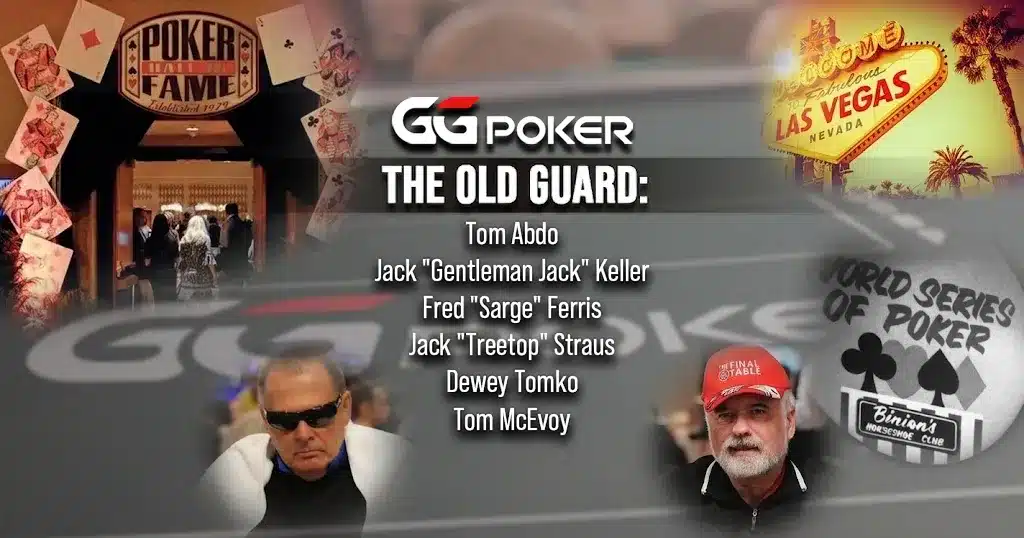
The Old Guard: Tom Abdo, Jack Keller, Fred Ferris, Jack Straus, Dewey Tomko and Tom McEvoy
By the time poker had a world championship, it had already lived through a whole secret history. Before the bracelets and the television lights, the game belonged to a fraternity of road gamblers and back-room professionals who treated the table not as a career but as a way of life, and often as the only life that made sense to them. This is the story of six of them, the old guard: men who came up in the era before poker was respectable and stayed at the table until it was. Some won the world title. One was carried out of his seat and never came back. And one of them, almost by accident, opened the door that would let everyone else in. It starts, as these stories do, with a man who would not leave the game.
Tom Abdo
Tom Abdo barely exists in the record books, and that is exactly why he belongs first. Born in 1894, he played in an age that kept no leaderboards, when the biggest games ran in smoky back rooms and a man’s reputation was the only statistic that counted. There is no bracelet count for Abdo, no career earnings figure. What there is instead is a story, and it is the truest thing anyone ever told about the old guard.
Playing a hand one night, Abdo suffered a heart attack. As he was helped from the table, he asked the man beside him to count his chips and hold his seat. He meant to come back. He never did, dying not long after, in 1967, and the story has been passed around poker tables ever since, because every professional who heard it understood it at once. For these players the game was not something you did. It was where you lived. Abdo was inducted into the Poker Hall of Fame in 1982, long after his death, once the game had gathered enough history to know who its founders were.
Jack Keller
If Abdo was the game’s devotion, Jack Keller was its manners. Born in 1942 and a veteran of the Air Force before he ever turned pro, Keller earned the nickname “Gentleman Jack” the hard way, by conducting himself with a courtesy that stood out in a world not known for it. He was not soft. He won three WSOP bracelets and more than a million and a half dollars at the World Series, and in 1984 he took the biggest prize of all, winning the Main Event out of a three-handed finish against the rodeo champion Byron “Cowboy” Wolford.
Keller could play any form of the game, moving between seven-card stud and hold’em with equal ease, and he collected titles at Amarillo Slim’s Super Bowl of Poker along the way. But the name stuck because it was earned at the table, hand after hand, over decades. In a room full of hustlers and needlers, the description the other players eventually settled on for Keller was the simplest compliment poker can pay a man: he was a gentleman. He took his place in the Poker Hall of Fame, and held it on reputation as much as results.
Fred “Sarge” Ferris

Fred “Sarge” Ferris lived in the cash games, where the old guard did its real business. Through the 1970s and 80s, long before the money moved onto television, the biggest action in Las Vegas ran in private high-stakes games, and Ferris was a fixture there, respected for a steady nerve that suited his best event. He won a WSOP bracelet in No-Limit Deuce-to-Seven Draw, a patient lowball game with no room for flash.
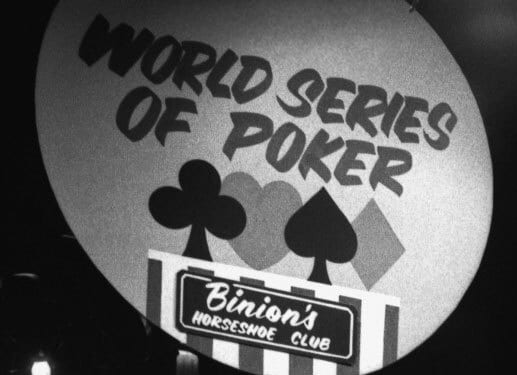
He also had an eye for talent. In 1980 Ferris put up the money to stake a brash young unknown named Stu Ungar into the World Series Main Event, a real gamble in an era when backing a player meant betting your own read against everything that could go wrong. Ungar won it. The old guard, it turned out, was quietly funding the future.
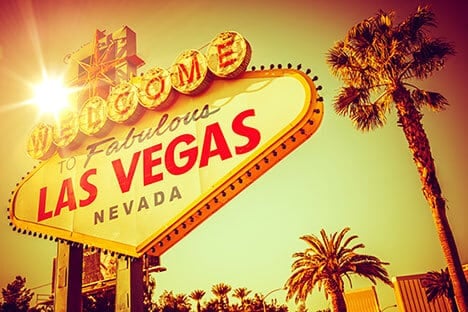
Ferris’s most famous moment, though, was not a hand. In 1983, during a game at Binion’s Horseshoe, IRS agents walked in and seized $46,000 in chips over unpaid back taxes, in front of the whole room. As they cleared him out, one agent reportedly handed back a single chip and told him to go buy himself a meal. Ferris shrugged it off without losing his composure, which is the part everyone remembered. It was a blunt lesson in the life these men led: the hardest spots were not always across the table, and the world outside the game did not always respect its rules. Ferris died in 1989, shortly after a high-stakes session, the way so many of them did, and was later inducted into the Poker Hall of Fame.
Jack “Treetop” Straus

Every era of poker has one story it tells more than any other, and the old guard’s belongs to Jack “Treetop” Straus. Born in San Antonio in 1930 and standing six feet six, Straus was a gambler’s gambler, a marksman and big-game hunter away from the felt and a fearless, creative bluffer on it. In one famous demonstration of his nerve he raised before the flop with 7-2 offsuit, the worst hand in poker, and bluffed a far better holding off the pot, even selling his opponent a peek at a single card to seal the con.

But the story is the 1982 World Series of Poker Main Event. Early in the tournament Straus pushed what he thought were all his chips into a pot and lost, and stood up to leave, beaten. Then someone spotted a single $500 chip hidden under a napkin. Because he had never formally announced himself all-in, he was still alive. Most players would call that a stay of execution. Straus called it a beginning. From that one chip he mounted the greatest comeback the tournament had ever seen and won the whole thing, $520,000 and the world title, and handed poker its most enduring article of faith: all a player really needs is a chip and a chair.
It was his second bracelet and the peak of a wild career. Straus died in 1988, at 58, doing exactly what the old guard always did, playing in a big game, and he was inducted into the Poker Hall of Fame that same year. The phrase he coined outlived him and everyone who was in the room. But the man he beat that night has a story of his own.
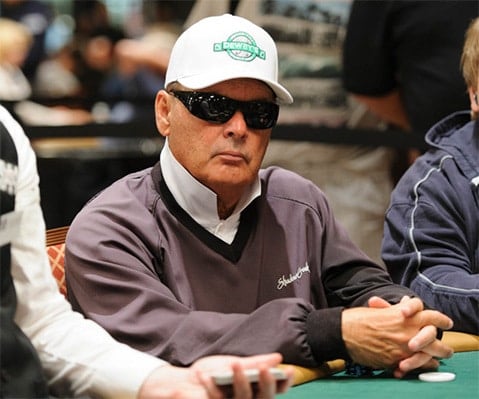
Dewey Tomko
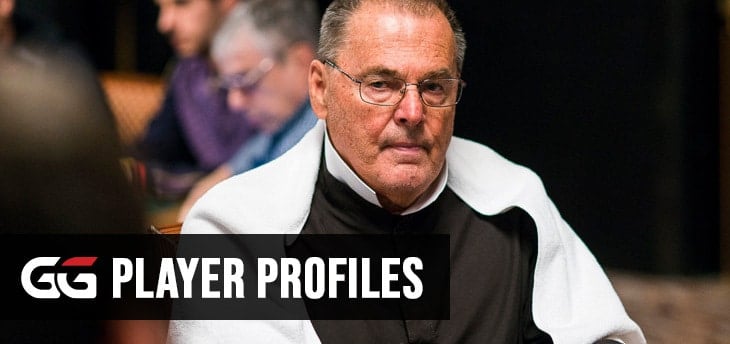
The man Jack Straus beat heads-up in 1982 was Dewey Tomko, and Tomko’s career is the quiet ache that runs underneath the old guard’s romance. A former kindergarten teacher from Pennsylvania who had paid his way through college with poker winnings, Tomko was no showman. He was a pure people-reader who, by his own cheerful admission, barely cared about the mathematics, and he was good enough to win three WSOP bracelets and more than four million dollars.
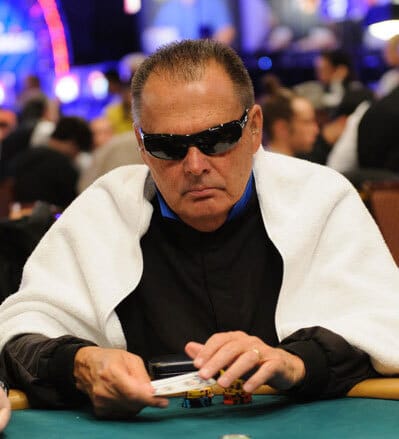
But he could not win the one that mattered. Sitting across from Straus in 1982, Tomko was on the wrong end of the chip-and-a-chair miracle, finishing runner-up in the Main Event. It would have been a fine near-miss to carry into retirement. Instead Tomko did something almost cruel in its symmetry: nineteen years later, in 2001, he came back and reached the Main Event final table again, and lost again, this time heads-up to Carlos Mortensen, in the event we cover over in The Boom Years. Two decades apart, two runner-up finishes in poker’s biggest tournament, one foot in the game’s outlaw past and one in its television future.
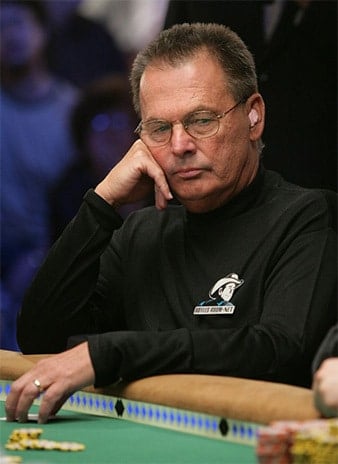
Tomko took it in stride, the way he took everything. He was a scratch golfer who played money rounds against the likes of Doyle Brunson and Phil Ivey, and a shrewd businessman who invested his winnings well. He entered the Poker Hall of Fame in 2008. If Straus is the old guard’s fairy tale, Tomko is its truer story: a brilliant player who kept coming back to the table for decades, chasing the single title that always stayed one card out of reach. Somebody had to be on the other side of the miracle.
Tom McEvoy

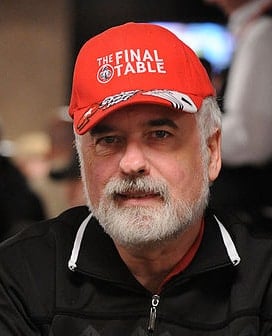
The last of our champions changed the game without anyone quite noticing at the time. Tom McEvoy was a Grand Rapids accountant who got laid off in 1978 and decided to gamble on poker rather than look for another desk. Five years later he was the world champion, and the way he got there mattered more than the title itself.
McEvoy did not buy into the 1983 Main Event. He won his seat in a satellite, a small qualifying tournament with a cheap entry and a Main Event seat as the prize, and then he went out and won the whole thing, beating fellow satellite qualifier Rod Peate in a heads-up match that ran more than seven hours, the longest in the tournament’s history to that point. He was the first person ever to turn a satellite seat into a world championship. He collected four bracelets in all, across hold’em, razz, and Omaha, and he poured his knowledge into more than a dozen strategy books, several co-written with T.J. Cloutier from the By the Book group. He also spent years pushing the game to clean up, staging the first non-smoking tournament in 1998 and living to see the World Series go smoke-free.
But the satellite is the thing. In 1983 McEvoy proved that an ordinary player with a small stake could win the biggest prize in poker without being rich or connected, simply by qualifying for it. Read that sentence again and you can already hear the footsteps of everything that came later. He entered the Poker Hall of Fame in 2013, honored as a champion. His real monument arrived twenty years after his win, when another laid-off accountant named Chris Moneymaker did the exact same thing, through an online satellite, on a stage the old guard could never have imagined.
A Chip and a Chair
The old guard is almost entirely gone now. Abdo, Ferris, Straus, Keller, and, in time, the rest took their seats for the last time, and the smoky back rooms they came up in gave way to arenas and live streams. But everything poker became was already present in these men. The devotion that kept Abdo in his chair, the nerve that won Straus a title from a single chip, the near-misses that defined Tomko, and above all the satellite seat that carried McEvoy to a championship: these were the seeds. When the game finally exploded into a global phenomenon in the 2000s, it did so along a path the old guard had already cleared. They played as though the table was the only thing that mattered. For them, it was.
👉 Use Referral Code: WINBIG 👈PLAY NOW!
About the Author: Shawn Altbaum has been writing and editing in the online gaming industry since 2007, reporting live from the WSOP Main Event and conducting interviews with professional players. An active poker player, he combines industry expertise with firsthand knowledge of the games he covers. He currently serves as Global Head of Copywriting at NSUS Group, overseeing brand voice and content strategy across GGPoker.